


What Is Jadeite? Understanding Vietnam’s Most Prized Gemstone
Chủ Nhật,
23/08/2026
Vietgemstones

There is a reason jade has always felt different from other gemstones.
It does not sparkle like a diamond, nor does it ask for attention with a brilliant flash of color. Jade has a quieter beauty — one that reveals itself slowly, through color, texture and the way light seems to rest beneath its surface.
In Vietnam, that quiet beauty has become part of everyday life. Jadeite bangles are worn for decades, jade pendants are passed from mother to daughter, and jade jewelry is often chosen to mark moments that matter. Yet there is a small paradox behind this familiar stone:
Vietnam does not mine jadeite.
Almost all gem-quality jadeite comes from northern Myanmar, yet jadeite has become one of the most valued and widely worn gemstones in Vietnamese culture. It is a stone that travelled from another land, but found a lasting place here — on people's wrists, around their necks, and within family stories.
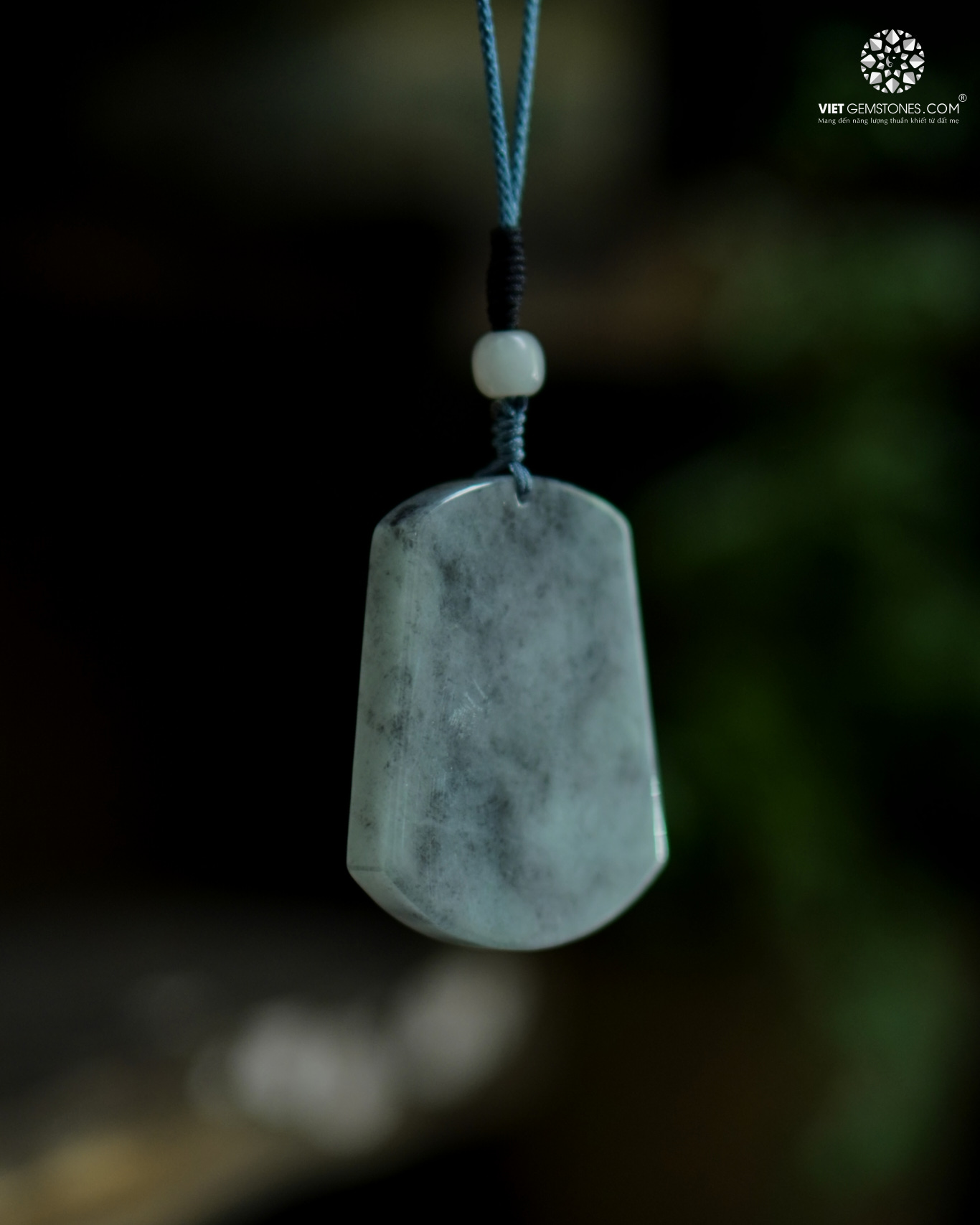
To understand why jadeite is treasured in Vietnam, it helps to begin with the stone itself.

What Is Jadeite?
The word “jade” can be misleading because jade is not the name of a single mineral.
In gemology, jade is an umbrella term that includes jadeite, nephrite, and, under certain conditions, green omphacite. Jadeite is a pyroxene, while nephrite belongs to the tremolite–actinolite series of amphiboles. They are different materials, although for centuries they were simply known as jade.
Jadeite has a particularly wide range of colors. Green is perhaps the color most closely associated with it, but jadeite can also appear in white, yellow, reddish-orange, grey, black, brown and lavender. Its transparency ranges from opaque to semi-transparent, giving each piece a different presence and character.
This is part of the charm of jadeite Vietnam has come to know so well. No two pieces necessarily tell the same visual story. One may be deep green and luminous; another may be pale and almost milky; another may carry subtle variations of color that only become visible when held against daylight.
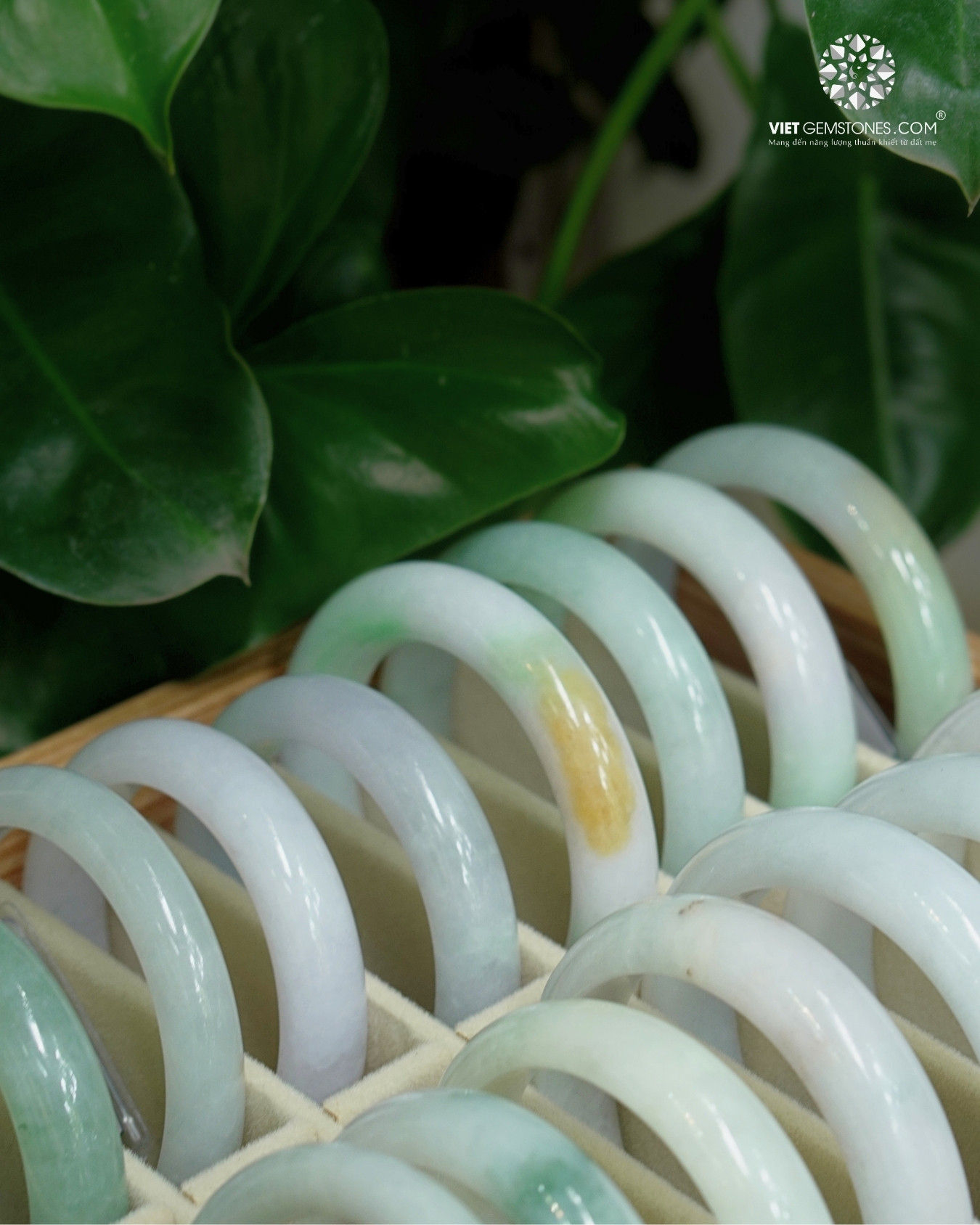
The beauty is not always immediate. Sometimes, it takes a little time to see it.
Jadeite vs Nephrite: Two Kinds of Jade
For anyone beginning to explore jade, jadeite vs nephrite is one of the first distinctions worth understanding.
The two materials differ in mineral composition and internal structure. Jadeite is made up of tiny, interlocking mineral crystals, while nephrite has a more fibrous structure. This interlocking structure is closely related to jade's exceptional toughness and resistance to breaking.
This is also where an important distinction between hardness and toughness comes in.
Hardness describes a material's resistance to scratching. Toughness describes its resistance to breaking or chipping. Jade is particularly remarkable for the latter.
That is why a jade bangle can survive everyday wear remarkably well, even though its surface can still be scratched by harder materials. Everyday dust contains quartz, for example, and harder jewelry worn beside jade can gradually leave marks on its surface.
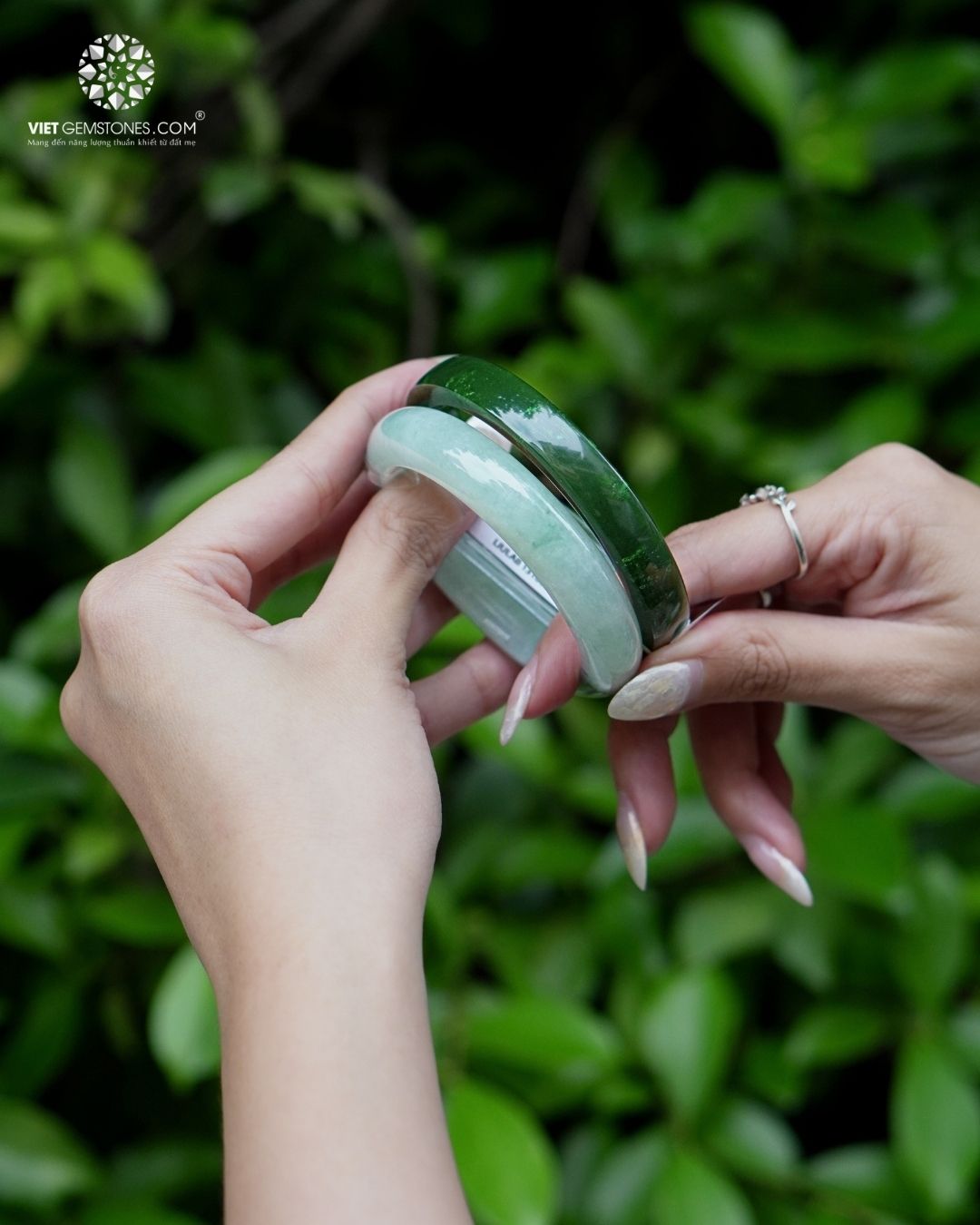
In other words, jade's strength does not come from being the hardest gemstone. It comes from the way its tiny crystals hold together.
Fei Cui: A Name You May Find on Modern Jade Reports
If you have ever looked at a modern laboratory report for jade, you may have noticed another name: Fei Cui (翡翠).
The word has a long history. In Chinese, 翡翠 has been used for more than a thousand years, with the name traditionally associated with the red and green plumage of the kingfisher. The modern gemological term “jadeite”, by comparison, is relatively recent, having been coined in the nineteenth century.
Today, Fei Cui is increasingly used as an umbrella term in modern gemological standards to describe jadeite, omphacite and kosmochlor, while the specific mineral species can still be identified separately on a laboratory report.
But there is one detail worth remembering:
Fei Cui is not a quality grade.
It does not mean that a piece is automatically premium, rare or valuable. The term describes mineralogy, not color or quality.
So when choosing jade, it is better to look beyond attractive terminology and understand what the material actually is.
Type A Jadeite: What Does It Really Mean?
For jade buyers, few terms are more important than Type A jadeite.
The Type A, B and C classification comes from the jade trade and describes how jadeite has been treated:
| Type | Meaning |
|---|---|
| Type A | Natural and untreated, apart from cutting, polishing and traditional waxing |
| Type B | Acid-bleached and impregnated with resin or polymer |
| Type C | Dyed |
| Type B+C | Bleached, impregnated and dyed |
There is a common misunderstanding here.
Type A does not mean “the best quality.”
It simply means that the jadeite has not undergone the treatments associated with Type B or Type C. A low-quality Type A stone can still be worth less than a visually attractive treated stone. Type A describes treatment status, not price or overall quality.
This is why “Is it real jade?” is not quite the right question.
A piece of Type B jadeite is still jadeite. The more useful question is:
“Is this Type A?”
And then:
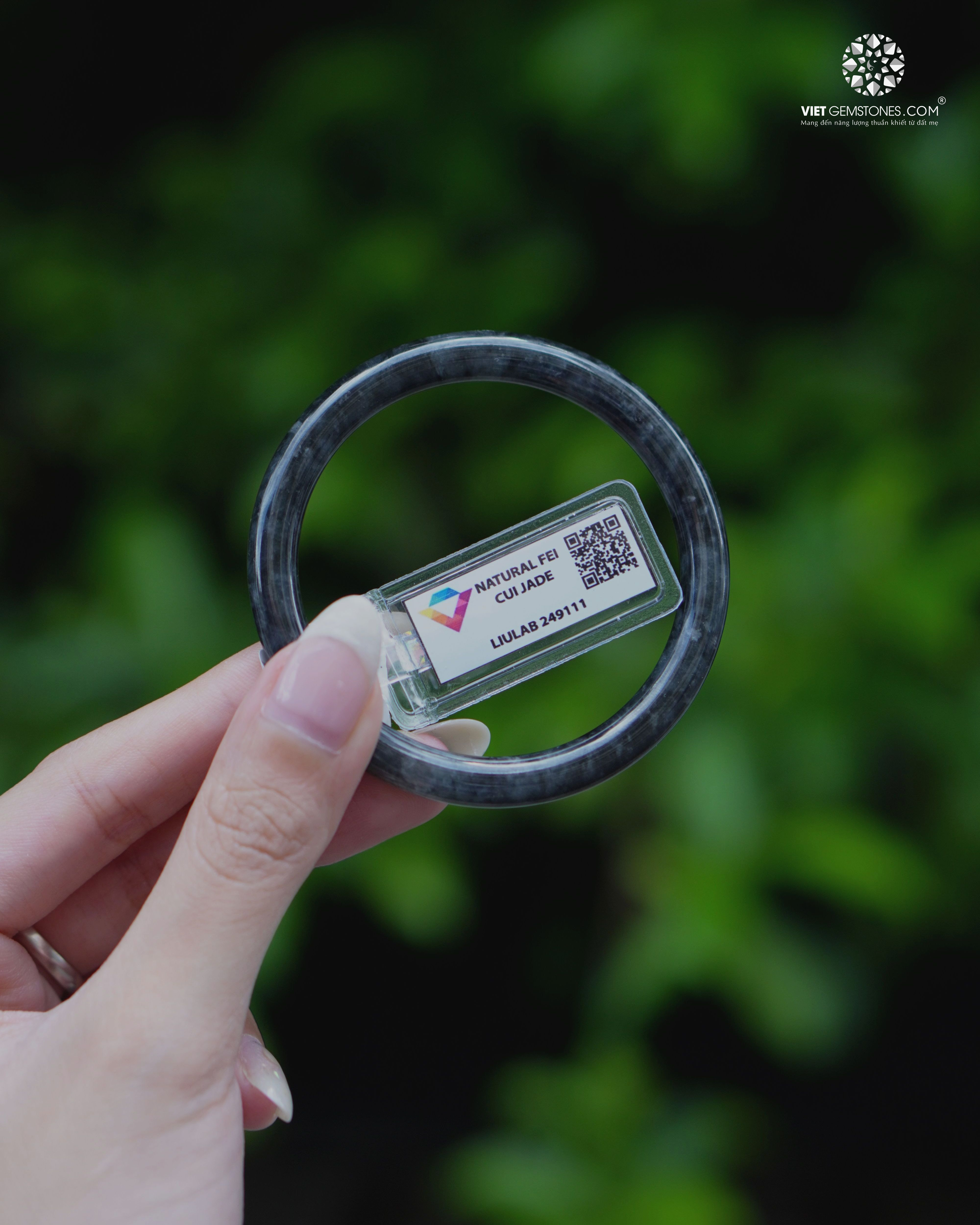
“Can I see the laboratory report?”
Type B treatment involves acid bleaching followed by polymer impregnation. The process can improve the appearance of lower-quality material by removing staining and filling the resulting spaces with resin. Over time, however, the resin can yellow, cloud or craze, while dyed color can fade.
Most importantly, treatment cannot be reliably identified simply by tapping the stone, feeling its temperature or looking at it under a torch. Laboratory techniques such as FTIR spectroscopy are used to identify polymer impregnation, while dyeing can be detected through spectroscopy and magnification.
For a meaningful jade purchase, a laboratory report tells you far more than a beautiful story ever could.

How Is Jadeite Quality Judged?
Once we know that a piece is Type A, another question naturally follows:
What makes one piece of jadeite more beautiful — and more valuable — than another?
There is no single answer.
Jadeite quality is considered through several factors, with colour, transparency, texture, and cut or carving playing important roles.
Color: The First Thing We Notice
Color is especially important when evaluating green jadeite.
The most prized green is pure and vivid, with strong saturation and little to no grey. At the highest end of the market is imperial jade, known for its vibrant emerald-green color and high transparency. Historically associated with the Chinese royal court, it is among the world's most valuable gemstones.
But there is no single color that defines beautiful jade.
Lavender jade has its own gentle character. White jade can feel calm and understated. Yellow, reddish-orange and black jadeite each create a very different impression.
Color is not simply a matter of rarity. It is also a matter of feeling.
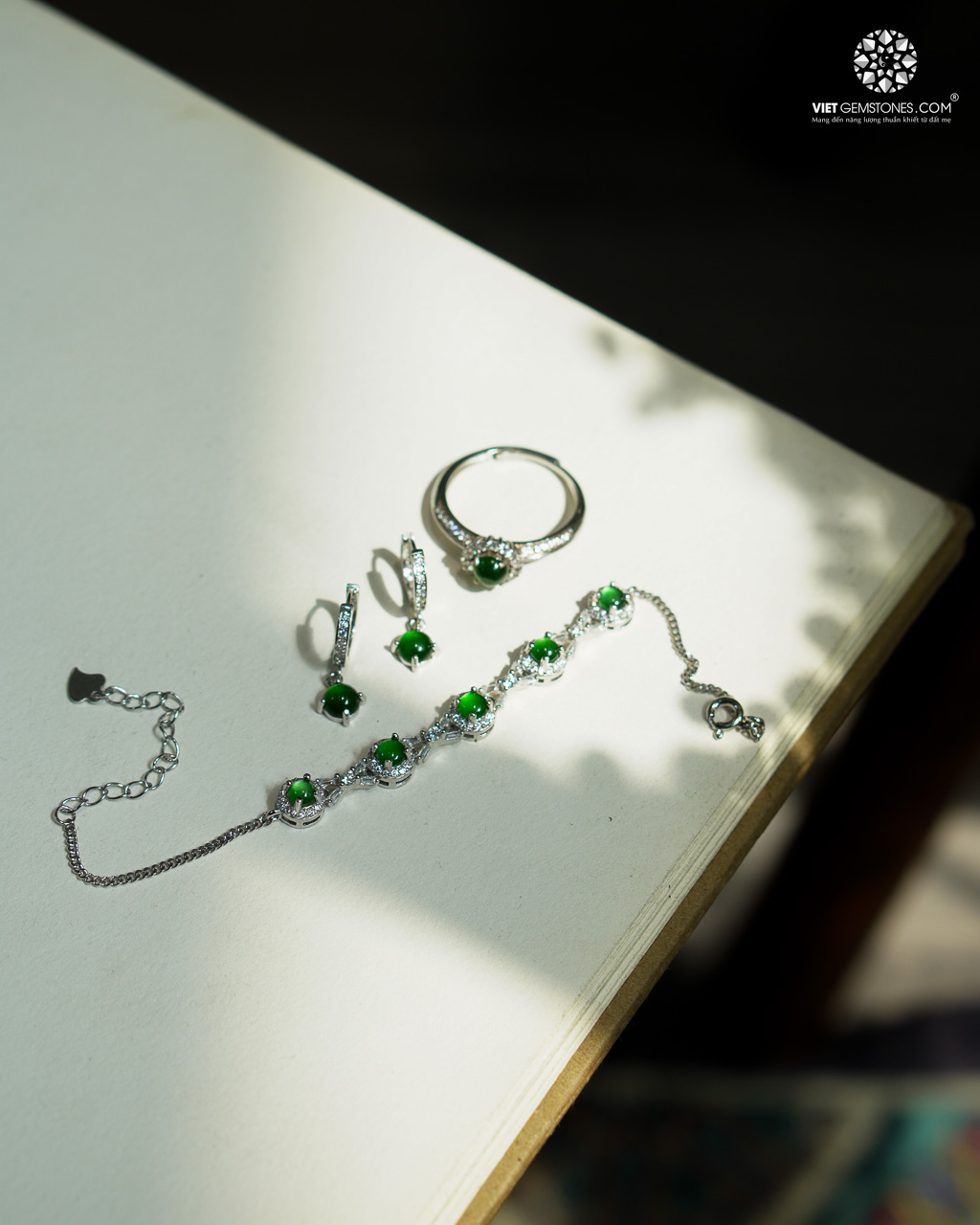

At VietGemstones, this is one of the things we appreciate most about jade: sometimes the stone that speaks to you is not the one with the highest market value, but the one whose color feels most like your own.
Transparency: The Light Within
Jadeite can range from completely opaque to semi-transparent, with greater transparency generally considered more desirable.
Fine jade has a particular way of interacting with light. Rather than simply reflecting it from the surface, the material allows light to enter and creates what GIA describes as an alluring brilliance — almost as if the stone glows from within.
This is difficult to capture in a photograph.
It is something you notice when you hold the jade yourself, preferably in natural daylight.
A pale piece with beautiful transparency can sometimes feel more alive than a strongly colored stone that appears dull or lifeless.
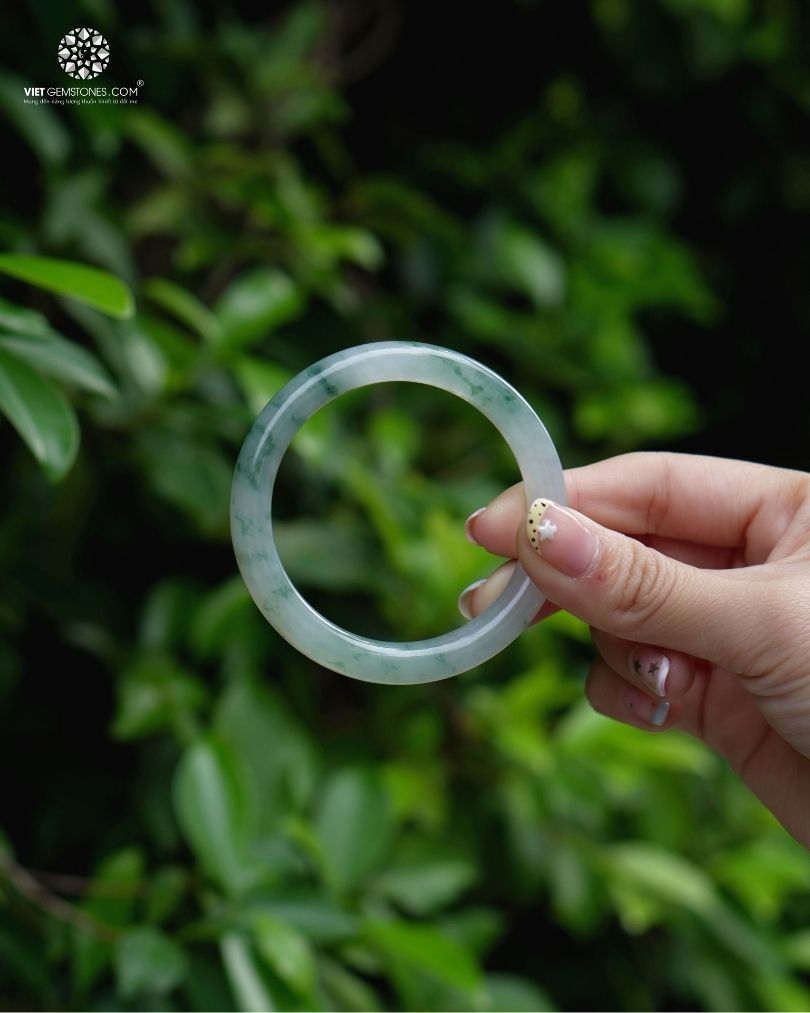
That quiet luminosity is one of jade's most distinctive qualities.

Texture: What Lies Beneath the Surface
Texture is determined largely by the size of the crystals within the jadeite.
Fine-grained material tends to have a smoother appearance and higher lustre, while coarser material may reveal a more granular texture. The traditional trade terminology includes terms such as “old mine”, “relatively old mine” and “new mine”, although these terms should not be treated as automatic guarantees of quality.
When you place two pieces of jade beside one another, this difference can become surprisingly easy to notice.
The color may be similar. The feeling may not be.
One stone can appear soft, smooth and almost luminous, while another looks more granular beneath the same light.
Cut and Carving: Working With the Stone
Jadeite can be shaped into bangles, beads, cabochons, pendants and carved pieces.
Traditional jade carving includes hololiths — objects carved from a single piece of rough. A jade bangle is one of the clearest examples: it is cut from a large disc of rough, with the centre removed and a significant amount of material potentially lost in the process.
This helps explain why a fine jade bangle can be considerably more valuable than a pendant made from material with a similar color.
With jade, craftsmanship begins long before the carving starts.
The cutter must first understand what is hidden inside the rough — where the color sits, where the flaws run, and which part of the stone is worth preserving.
There is an old principle in Chinese jade carving:
“Without a flaw, one does not conceal with flowers.”
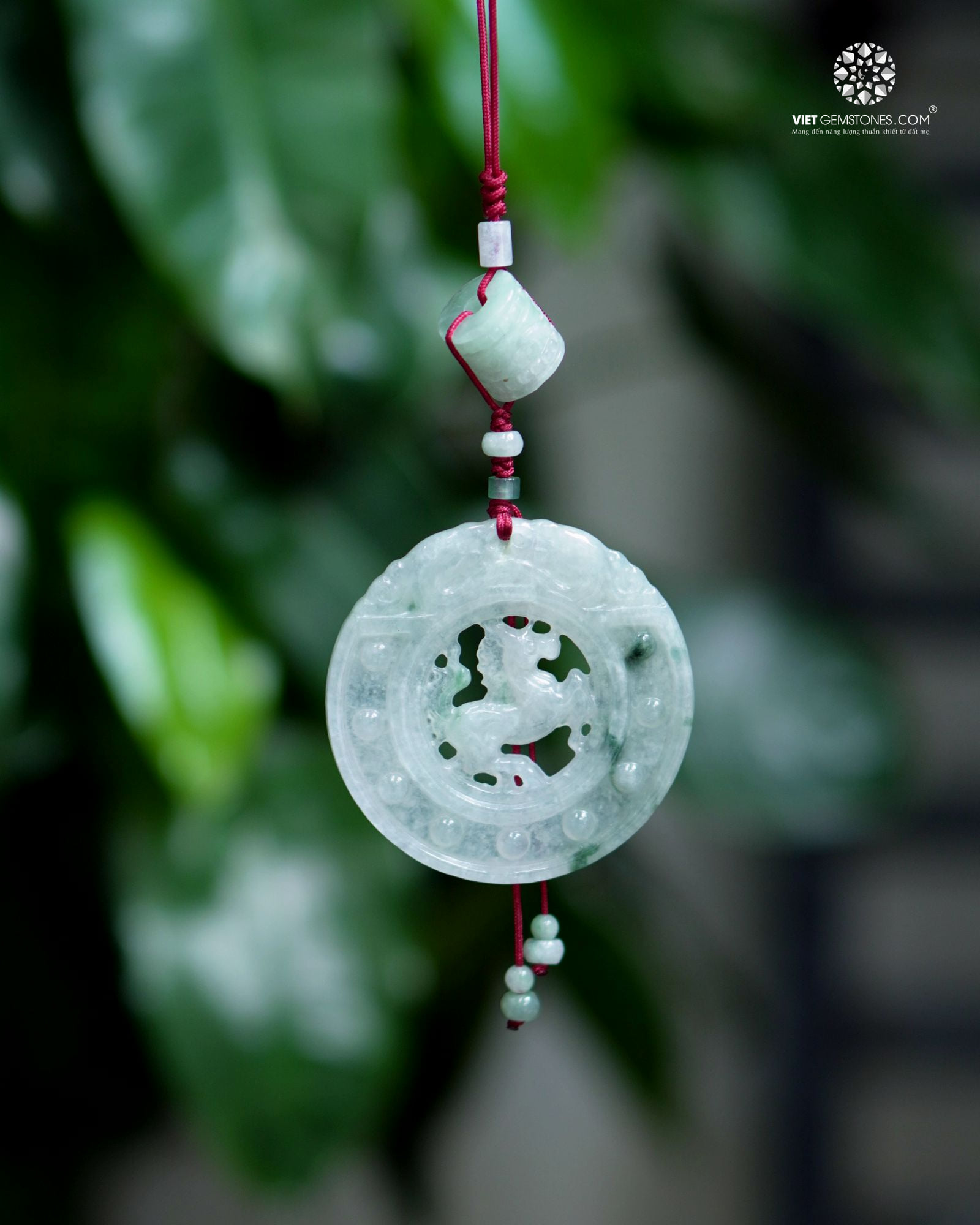
Hand carved Jadeite Jade Car Hanging Ornament

Elaborate carving can sometimes be used to conceal cracks, blemishes or areas of weaker color. This does not mean carved jade is inferior; fine carving is an art in itself. But when the material is exceptional, a simpler form often allows the stone to speak for itself.
Where Does Jadeite Come From?
Here is where the story returns to Vietnam.
Although jadeite has become deeply woven into Vietnamese culture, jadeite is not mined in Vietnam.
Almost all gem-quality jadeite historically comes from Hpakant, in Kachin State, northern Myanmar.
Jadeite is also found in Guatemala, particularly around the Río Motagua and Motagua Valley. Guatemalan jadeite occurs in green, white, yellow and lavender, as well as several distinctive varieties.
The origin of a stone is part of its story, but it should not be confused with quality.
A stone's beauty does not become meaningful simply because its origin sounds prestigious. What matters is the material itself, its treatment, its quality and the transparency of the person selling it.
For us, that distinction is important.
Because jade deserves to be appreciated for what it truly is — not for a story created around it.
How to Choose Jadeite with Confidence
Buying jade does not have to begin with knowing every technical term.
A few simple questions can take you a long way:
Is this jadeite or nephrite?
Is it Type A?
Does the laboratory report identify the species and treatment?
What does the color look like in natural daylight?
How transparent is the stone?
What is the texture like?
For a significant purchase, another useful question is whether the seller supports independent testing within the return period.
And then, simply look.
Take the jade towards a window. Turn it slowly. Notice how the color changes with the light. Look at the texture. If possible, compare several pieces side by side.
Jade is not a gemstone that needs to be rushed.
The more time you spend looking, the more you begin to notice.
Why Has Jade Become So Beloved in Vietnam?
There is a reason jade has remained meaningful across generations, and it may have less to do with rarity or price than we imagine.
Jade has a particular kind of beauty that seems suited to a long life.
A new jade bangle has one appearance. The same bangle after years of being worn and cared for can feel softer, warmer and more personal. Regular wear can gradually change the surface, giving the piece a character that cannot simply be manufactured.
This is perhaps one of the most beautiful things about jade.
It does not have to remain untouched to remain precious.
It can be worn. It can accompany you. It can become part of a memory.
And eventually, the value of the piece may no longer be only about the stone itself, but about the years it has lived alongside you.
There is an old Chinese saying:
“Three years of a person nurturing jade, a lifetime of jade nurturing the person.”
The second half belongs to poetry rather than gemology. But the first carries a simple truth: jade that is worn and cared for can develop a beauty of its own over time.
Perhaps this is why jade feels so at home in Vietnamese life.
It is not a gemstone meant only to be admired in a display case. It is a gemstone meant to be lived with.
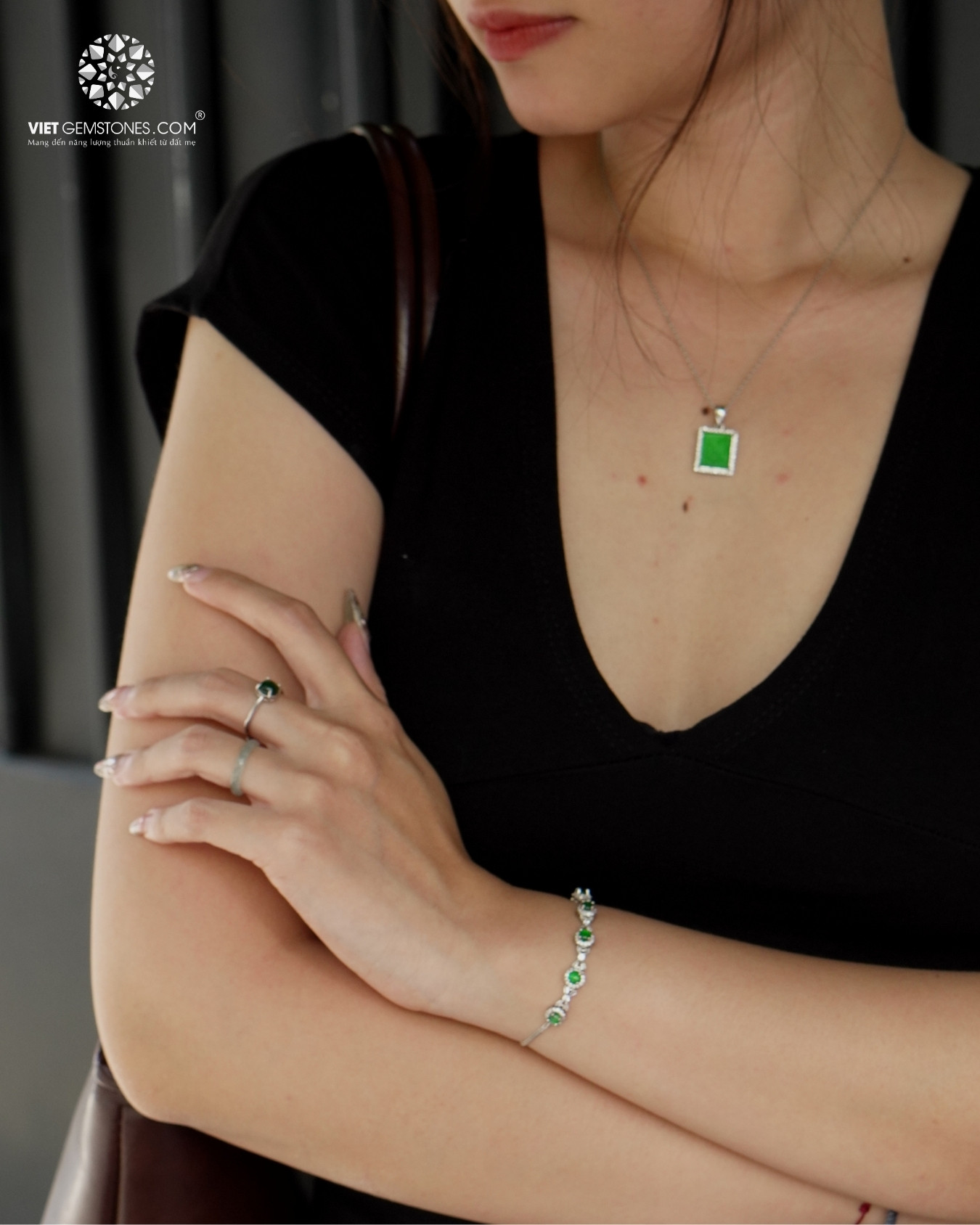
Jadeite Jade in daily wear jewelry
A Final Thought from VietGemstones
The more we learn about jade, the easier it becomes to understand why it has endured for so long.
Its value is not contained in one color, one origin or one price.
It lies somewhere between geology and craftsmanship, between the natural character of the stone and the human hands that shape it, between the moment we first choose a piece and the years that follow.
Jade does not sparkle loudly. It holds light quietly.
And perhaps that is exactly why people continue to return to it.
For generations, jade has travelled across borders, cultures and families, becoming something deeply personal along the way. A bangle worn every day. A pendant chosen for someone we love. A piece kept because it once belonged to someone before us.
At VietGemstones, this is what makes jadeite more than a gemstone.
It is a material with the quiet ability to become part of a life.
And sometimes, the best way to understand jade is not to ask how valuable it is.
Simply hold it to the light.
Look slowly.
And let the stone tell you its own story.
Further Reading
Từ khóa:
jade
jadeite
natural jade
ngoc
ngoc-bich
ngọc cẩm thạch
ngọc phỉ thúy
type a jade
where to buy jade
Bạn có thể quan tâm

Là ngọc hay đá – Góc nhìn của người làm nghề đá tự nhiên
Trong quá trình tư vấn cho khách hàng, có một câu hỏi mà bọn mình nghe đi nghe lại suốt nhiều năm làm việc với đá tự nhiên: “Cái này là đá hay là ngọc vậy anh?” Nghe thì đơn giản, nhưng phía sau câu hỏi ấy là rất nhiều hiểu lầm, tranh cãi, thậm chí thất vọng của người mua khi bước vào thế giới trang sức đá tự nhiên. Có người cho rằng “đã gọi là ngọc thì phải quý, phải đắt”, người khác lại tin rằng “ngọc là một loại đá khác hoàn toàn”, thậm chí có người mua về rồi mới phát hiện: thứ mình mua “nghe là ngọc”, nhưng thực chất chỉ là… đá phổ thông. Vậy rốt...
Thứ Tư, 24/12/2025

Phân biệt cẩm thạch thật giả: 5 cách kiểm tra đơn giản tại nhà
“Vòng này có phải cẩm thạch thật không?” Đây là một trong những câu hỏi tụi mình thường nhận được khi khách mang một món ngọc đến VietGemstones nhờ xem giúp. Câu hỏi nghe có vẻ đơn giản, nhưng với cẩm thạch, hai chữ “ngọc thật” lại có thể bao hàm nhiều điều khác nhau. Một món trang sức có thể không phải jadeite mà chỉ là một loại đá khác có vẻ ngoài tương tự. Cũng có trường hợp đó đúng là jadeite, nhưng đã qua xử lý bằng axit, polymer hoặc nhuộm màu. Và ngay cả khi là jadeite tự nhiên, chất lượng của viên ngọc vẫn còn được đánh giá qua màu sắc, độ trong, cấu trúc, độ sạch và...
Chủ Nhật, 04/10/2026

Chuỗi Mân Côi 50 Kinh và cách lần chuỗi Mân Côi
“Trong các kinh nguyện chúng con dâng lên Mẹ, thì không có việc nào làm đẹp lòng Mẹ cho bằng kinh Mân Côi. Vậy kể từ nay, Mẹ sẽ ban cho những ai lần chuỗi Mân Côi của Mẹ, mà xin Mẹ điều gì, thì Mẹ sẽ ban cho được như ý”. Chuỗi Mân Côi 50 Kinh không chỉ là một dụng cụ cầu nguyện, mà còn là một hành trình kết nối sâu sắc, Mỗi hạt Mân Côi trở thành một mối liên kết giữa chúng ta với Thiên Chúa và Đức Mẹ, và mỗi kinh nguyện là một bước tiến gần hơn đến sự hiện diện của họ trong cuộc sống hàng ngày. Phải trải qua quá trình phát...
Thứ Ba, 14/11/2023

Trì chú, khai quang đá phong thuỷ là gì và những điều cần biết
Bạn thân mến, chắc hẳn bạn đã từng nghe đến khái niệm trì chú hay khai quang điểm nhãn trang sức phong thuỷ. Việc quá nhiều thông tin không rõ ràng về khái niệm này có thể làm cho bạn cảm thấy hoang mang như lạc trong mê trận. Ở bài viết này, chúng ta sẽ cùng nhau vén bức màn chướng và hãy xem xem liệu rằng chúng ta có cần phải trì chú đối với trang sức phong thuỷ không bạn nhé! Trì chú là gì? Khai quang điểm nhãn là gì? Về bản chất thì 2 khái niệm này đều ám chỉ việc con người thổi cái hồn, cái linh khí vào vật phẩm có ý nghĩa...
Thứ Ba, 21/03/2023

Những hiểu lầm về tinh thể đá tự nhiên (Phần 2)
Như đã để cập ở bài viết Những hiểu lầm về tinh thể đá tự nhiên (Phần 1), ở bài này chúng ta sẽ tiếp tục vén bức màn chướng là những định kiến cố hữu mà ai trong chúng ta dù ít hay nhiều cũng mắc phải trong khi tìm hiểu về tinh thể đá tự nhiên. Hiểu lầm #4: Sử dụng nhiều tinh thể cùng lúc có thể xung khắc, gây hại? Lần đầu tiên khi nghe được câu hỏi này tôi đã rất thắc mắc rằng tại sao lại có thể như thế được nhỉ? Hiểu lầm về tinh thể rằng sử dụng nhiều tinh thể có thể gây hại? Tinh thể đắt tiền hơn có mang...
Thứ Sáu, 17/03/2023

Những hiểu lầm về tinh thể đá tự nhiên (Phần 1)
Sau một thời gian khá lâu tìm hiểu, chiêm nghiệm và kinh doanh trang sức và tinh thể đá tự nhiên, tôi thường xuyên tiếp xúc với những lời đồn thổi, những ngộ nhận, thông tin sai lệch và thiếu chính xác thiên về cảm tính và trong bài viết này, tôi muốn được giải hoặc ít nhiều để quý bạn đọc có cái nhìn chân thật, thực tế hơn về những tinh thể thuần khiết của chúng ta. Hiểu lầm về tinh thể đá tự nhiên #1: Thử tinh thể đá thật giả bằng cách đốt nóng. Chắc hẳn các bạn đã nghe ở đâu đó về việc sử dụng lửa để thử đá tự nhiên thật hay giả,...
Thứ Năm, 16/03/2023