


Peridot: The Green Gemstone with a History Written in Stars
Chủ Nhật,
02/08/2026
Vietgemstones

Among the world’s gemstones, Peridot has a distinctive kind of beauty. Its green is not the deep, mysterious green of Emerald, nor the cool, tranquil green of Jade. Peridot carries a warmer light—often described as olive, lime, or golden green—like sunlight passing through young leaves.
But what makes Peridot truly fascinating is not only its color.
For thousands of years, this gemstone has been surrounded by stories of hidden treasure, ancient civilizations, protection from darkness, and even celestial origins. Some of these stories are myths. Others are rooted in surprisingly fascinating facts.
Here are a few things about Peridot that you may not have known.
Peridot May Be One of the Few Gemstones Born Deep Inside the Earth
Unlike many gemstones that form in the Earth's crust, Peridot is the gem-quality variety of the mineral olivine, a major component of Earth's upper mantle.
In other words, some Peridot crystals originate much deeper beneath our feet than most people imagine.
They can be brought closer to the Earth's surface through volcanic activity, carried upward in certain types of volcanic rocks. This geological journey is part of what makes Peridot so intriguing: the stone we eventually wear as jewelry may have begun its story deep within the Earth, long before human civilization existed.
And there is an even more extraordinary possibility.
Scientists have found Peridot-like olivine crystals in meteorites and have identified olivine-rich material in space. This has led to one of the most poetic associations with Peridot: a gemstone that connects the Earth with the cosmos.
Although not every Peridot comes from space, the idea itself is not entirely mythical. Some extraterrestrial materials do contain olivine, making Peridot part of a mineral family that exists beyond our planet.
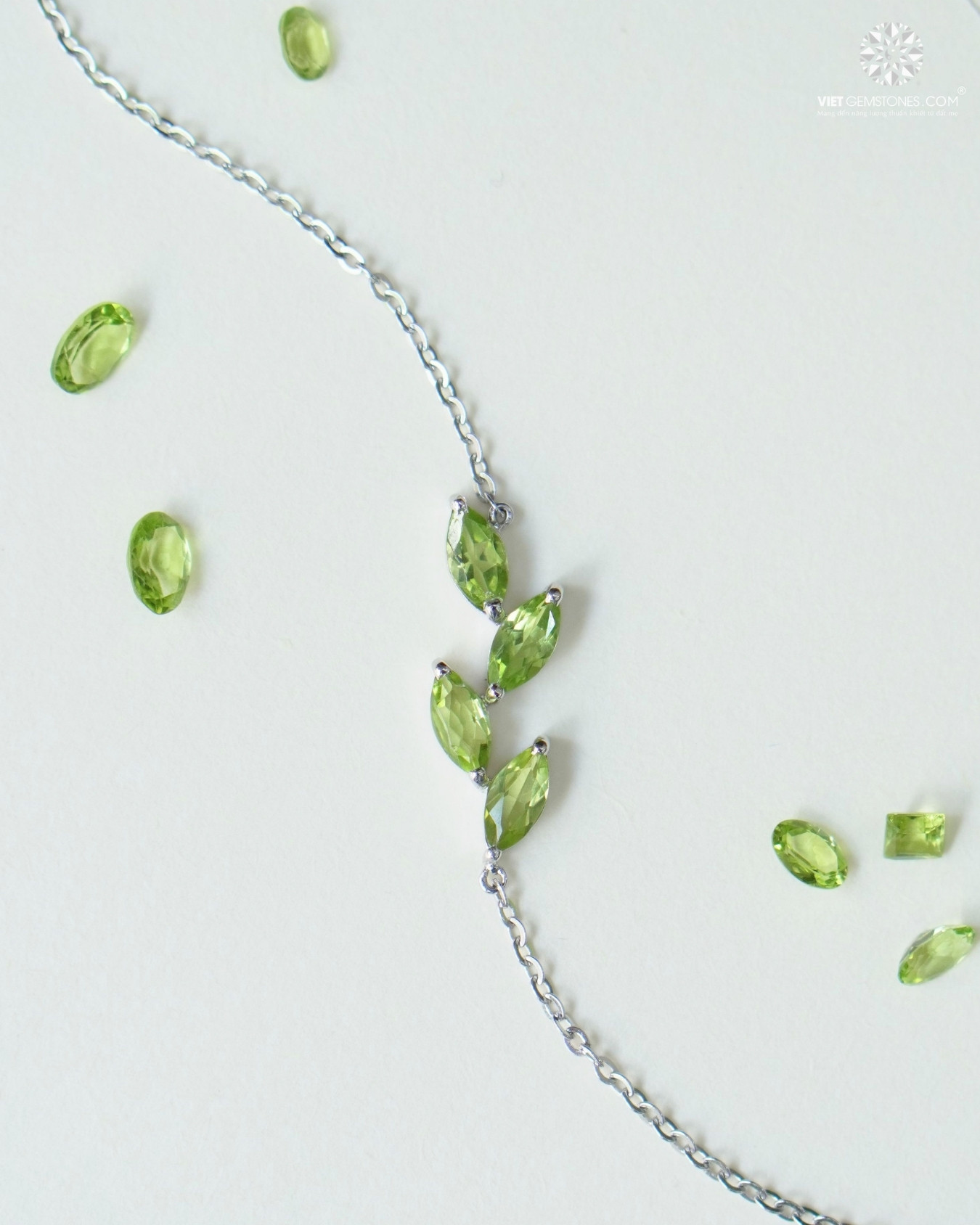
A gemstone born from the depths of the Earth - and related to minerals found among the stars.
The one that is called : “Tear of God”
The lore of Peridot continues in lands shaped by fire and legend. In Hawaiian tradition, the green crystals are sometimes described as the tears of Pele, the goddess of volcanoes—a poetic reflection of the geology beneath the islands, where volcanic lava is rich in olivine and the famous Papakolea Beach is covered in naturally green olivine sand.
Across the ocean, Peridot found another place in European folklore. It was believed to offer protection from nightmares and nighttime fears, worn as a talisman or kept nearby to encourage peaceful sleep. During the medieval period, the stone also found its way into church treasures, where its luminous green was associated with light and spiritual symbolism.
These beliefs belong to the cultural history surrounding Peridot rather than to modern scientific claims. Yet they help explain why the gemstone has carried an enduring association with light, warmth, and protection.
Today, Peridot is the birthstone of August and the traditional gemstone celebrating the sixteenth wedding anniversary—a modern continuation of a story that has traveled through volcanoes, ancient civilizations, folklore, and centuries of human imagination.
Evening Emerald and the mistaken Emerald of Cleopatra
Peridot's story can be traced back thousands of years to a remote island in the Red Sea. Known to the ancient world as Topazios, Zabargad was one of Egypt's most important sources of the gemstone for more than three millennia. Ancient people tell of miners searching for the stones at night, marking the places where they appeared to shimmer in the darkness before returning by daylight to retrieve them. The Egyptians associated Peridot with the sun and regarded it as a stone of protection—a fitting contrast for a gem believed to reveal itself beneath the stars while being connected to the power of the sun.
The island's ancient name also left an unexpected mark on gemstone history. The "topaz" described in ancient texts was most likely Peridot, with the name eventually becoming attached to the golden gemstone we now know as Topaz.
Peridot's story became even more intriguing as the centuries passed, when the gemstone was often mistaken for Emerald. The Romans called it the "Evening Emerald," admiring the way its green remained vivid under lamplight. Some historians have even suggested that several of the green gemstones associated with Cleopatra may have been Peridot rather than Emerald. And in a remarkable twist of history, the enormous 200-carat "Emeralds" set into the Shrine of the Three Kings in Cologne Cathedral were later identified as Peridot.
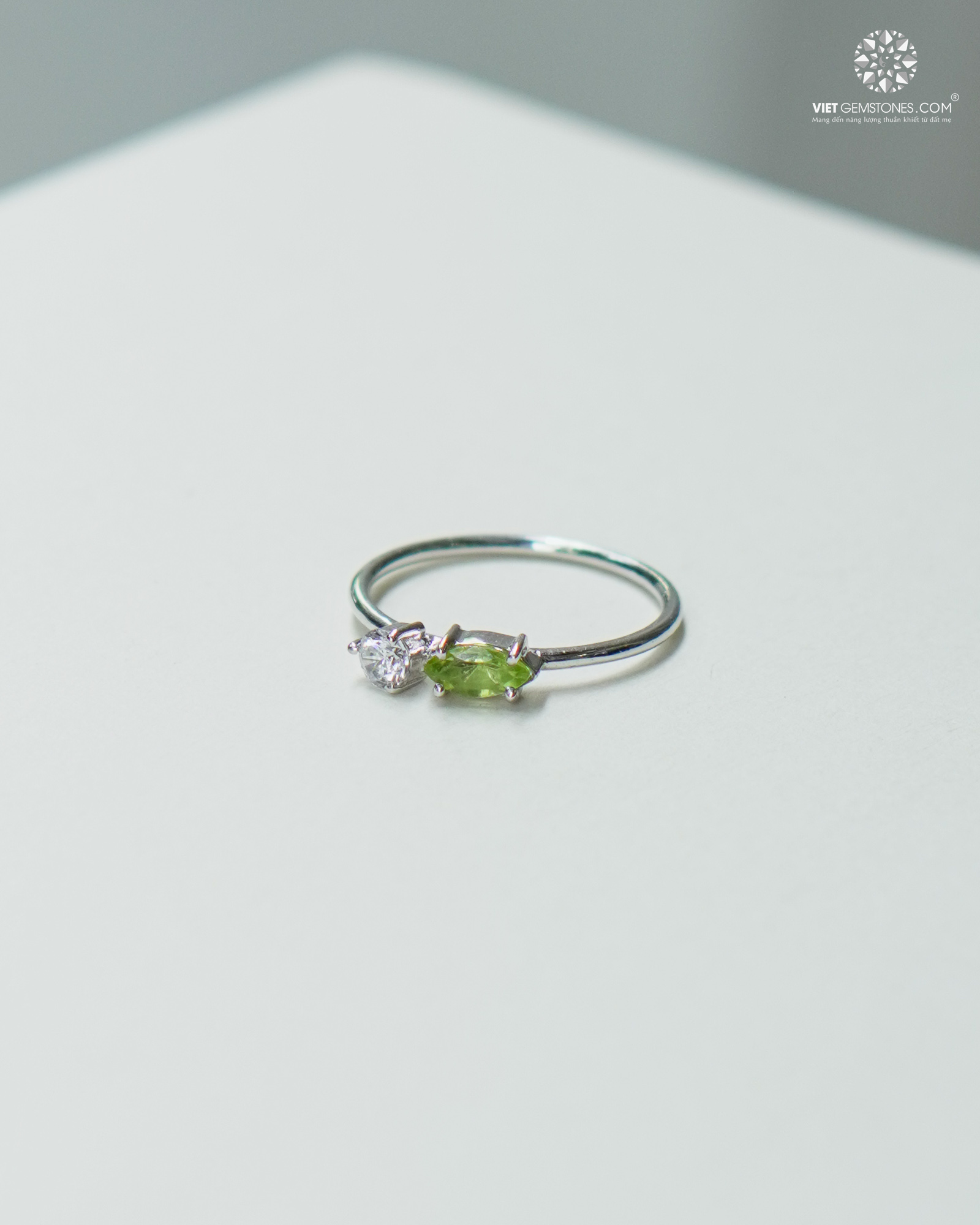
For centuries, Peridot was admired under another name.
Peridot's Green Is Written Into Its Nature
When we think of green gemstones, Emerald is often the first that comes to mind.
Yet Peridot carries a green that is entirely its own.
Its color moves from soft yellow-green and olive to brighter, more vivid shades, with a warm golden undertone that gives the stone its unmistakable character. Unlike gemstones whose colors are created by trace elements, Peridot's green comes from iron that is naturally part of its chemical composition.
Gemologists call this idiochromatic coloration. In other words, Peridot does not need an outside influence to become green. It is written into the stone itself. Perhaps this is also why Peridot has such a consistent personality. Even when its shades vary, there is always something unmistakably Peridot about the way its green appears - warm, luminous, and touched by gold. Not the deep forest green of Emerald. Not the cool, quiet green of Jade. But a green that feels as though sunlight has found its way into the stone.
Every gemstone carries a geological history. But Peridot's story feels particularly poetic.
It may begin deep beneath the Earth's surface. It may be brought upward through volcanic forces. In rare cases, its mineral family may be connected to material from outer space. It may be mistaken for another gemstone in an ancient royal treasure. It may become the subject of legends about divine tears, celestial light, and protection from darkness.
And eventually, after thousands or millions of years, it becomes something personal.
A ring. A pendant. A pair of earrings.
Something that rests against the skin of a person who may never know how long the stone has been waiting to be found. Peridot is not just a simple green gemstone, it is a fragment of a much larger story—one that begins beneath the Earth, reaches into ancient civilizations, touches the imagination of generations, and continues into the life of whoever wears it today.
Whatever you choose to believe, Peridot remains a gemstone that seems to exist somewhere between myth and geology—a small piece of green light with a story far older than any of us.
Bạn có thể quan tâm

Guanyin in Asian Culture: Meaning, History & Guanyin Pendants
Some figures have a way of evoking a familiar feeling the moment we see them. A serene figure seated upon a lotus.A gentle face, with eyes softly lowered.A willow branch and a vessel of pure water held in her hands. This is Guanyin — one of the most familiar figures in the cultural and spiritual life of Vietnam and across much of Asia. Quan Âm Cẩm Thạch - Jadeite 5.190.000₫ Xem sản phẩm In Vietnam, she is known as Quan Âm Bồ Tát or Quán Thế Âm Bồ Tát. Her name, 觀世音, is commonly understood as the Bodhisattva who listens to the sounds of the world — hearing the cries, suffering, and prayers of sentient beings. But beyond Buddhist teachings, Guanyin also exists in a...
Thứ Hai, 21/09/2026

THẾ GIỚI TÍ HON TRONG LÒNG VIÊN THẠCH ANH
Những “vị khách không mời” kể chuyện hàng triệu năm địa chất Nếu có một loại đá mà hầu như bất kỳ ai từng bước vào một tiệm trang sức đá tự nhiên cũng ít nhất một lần cầm trên tay, thì rất có thể đó là thạch anh. Một chiếc vòng thạch anh tóc, một mặt dây thạch anh khói, một chuỗi hạt thạch anh hồng, hay đơn giản chỉ là một tinh thể thạch anh trong suốt đặt trên bàn làm việc. Thạch anh quen thuộc đến mức đôi khi chúng ta quên mất rằng, bên trong những viên đá tưởng như trong veo và tĩnh lặng ấy, có thể đang tồn tại cả một thế giới rất nhỏ. Một thế giới...
Thứ Ba, 08/09/2026

Vòng cẩm thạch nguyên khối: chọn thế nào cho đúng và cách nhận biết thật - giả
“Vòng này có thật không shop?”, “Con xem giúp cô vòng của cô thật hay giả?” “Vòng này lúc trước mình mua giá như vậy là cao hay thấp?” là những câu hỏi tụi mình thường được nhận khi tư vấn.Câu hỏi thì ngắn, nhưng câu trả lời lại chưa bao giờ ngắn được. Bởi vì trong thế giới cẩm thạch, hai chữ "ngọc thật" gói gọn ít nhất ba tầng nghĩa: Thật về chất liệu: Chuẩn ngọc tự nhiên, không phải thủy tinh hay nhựa giả đá. Thật về xử lý: Chưa qua tẩy rửa axit hay bơm keo hóa chất. Thật về giá trị: Chất lượng ngọc thực sự tương xứng với số tiền bạn đã bỏ ra. Ba tầng nghĩa ấy...
Thứ Bảy, 05/09/2026

Cẩm Thạch, Phỉ Thúy, Ngọc Bích: Ba Cái Tên, Hai Viên Đá Và Một Sự Nhầm Lẫn Kéo Dài
Có một câu hỏi tưởng như rất đơn giản khi bắt đầu tìm hiểu về ngọc: Rốt cuộc “ngọc” là gì? Ở Việt Nam, ba cái tên cẩm thạch, phỉ thúy và ngọc bích thường được nhắc đến cùng nhau. Có khi chúng được dùng như những cách gọi khác nhau của cùng một loại đá. Nhưng thực tế không hẳn như vậy. Đằng sau ba cái tên ấy là hai loại khoáng vật khác nhau — có cấu trúc, tính chất, nguồn gốc địa chất và lịch sử văn hóa khác nhau. Và có lẽ chính sự lẫn lộn này khiến câu chuyện về ngọc trở nên thú vị hơn rất nhiều. Bắt đầu từ một chú chim Trong ba cái tên trên, phỉ thúy...
Thứ Ba, 01/09/2026

THÁNG 5 – THÁNG CỦA EMERALD
Từ cao nguyên Ethiopia đến “vành đai xanh” Zambia: Hành trình của viên ngọc lục bảo Tháng 5 luôn được xem là tháng của Emerald – ngọc lục bảo, loại đá quý mang sắc xanh của sự sống, của mùa xuân và của tái sinh. Nhưng phía sau màu xanh mê hoặc ấy không chỉ là vẻ đẹp. Đó còn là câu chuyện của địa chất, của những vùng đất khắc nghiệt, của lịch sử khai khoáng và cả những bí mật nằm sâu bên trong từng bao thể nhỏ bé. Cao nguyên Ethiopia Nếu bạn đang sở hữu một viên Emerald xanh mướt đến từ Ethiopia hay Zambia, rất có thể viên đá ấy đã trải qua một hành trình dài hơn...
Thứ Năm, 14/05/2026

Nhận biết các đặc điểm tự nhiên của ngọc Jadeite - Vân, sớ, bông, rạn, rễ màu
Các bài viết liên quan: Tiêu chí đánh giá phẩm chất và phân cấp ngọc Phỉ Thúy Đôi nét về Phỉ thúy và những hiểu lầm về ngọc Phỉ Thúy thường gặp Nhận biết các màu sắc của phỉ thuý (Jadeite) Là ngọc hay đá – Góc nhìn của người làm nghề đá tự nhiên Lợi ích khi đeo vòng ngọc Jade - hành trình của người và ngọc Nếu đặt một viên phỉ thuý bên cạnh thủy tinh hay kim loại, sự khác biệt lớn nhất không nằm ở màu sắc hay độ bóng, mà nằm ở bản chất cấu trúc. Jadeite không phải là một khối đồng nhất, mà là một hệ thống đa tinh thể cực kỳ phức tạp, được tạo thành từ...
Thứ Bảy, 04/04/2026