


Guanyin in Asian Culture: Meaning, History & Guanyin Pendants
Thứ Hai,
21/09/2026
Vietgemstones

Some figures have a way of evoking a familiar feeling the moment we see them.
A serene figure seated upon a lotus.
A gentle face, with eyes softly lowered.
A willow branch and a vessel of pure water held in her hands.
This is Guanyin — one of the most familiar figures in the cultural and spiritual life of Vietnam and across much of Asia.
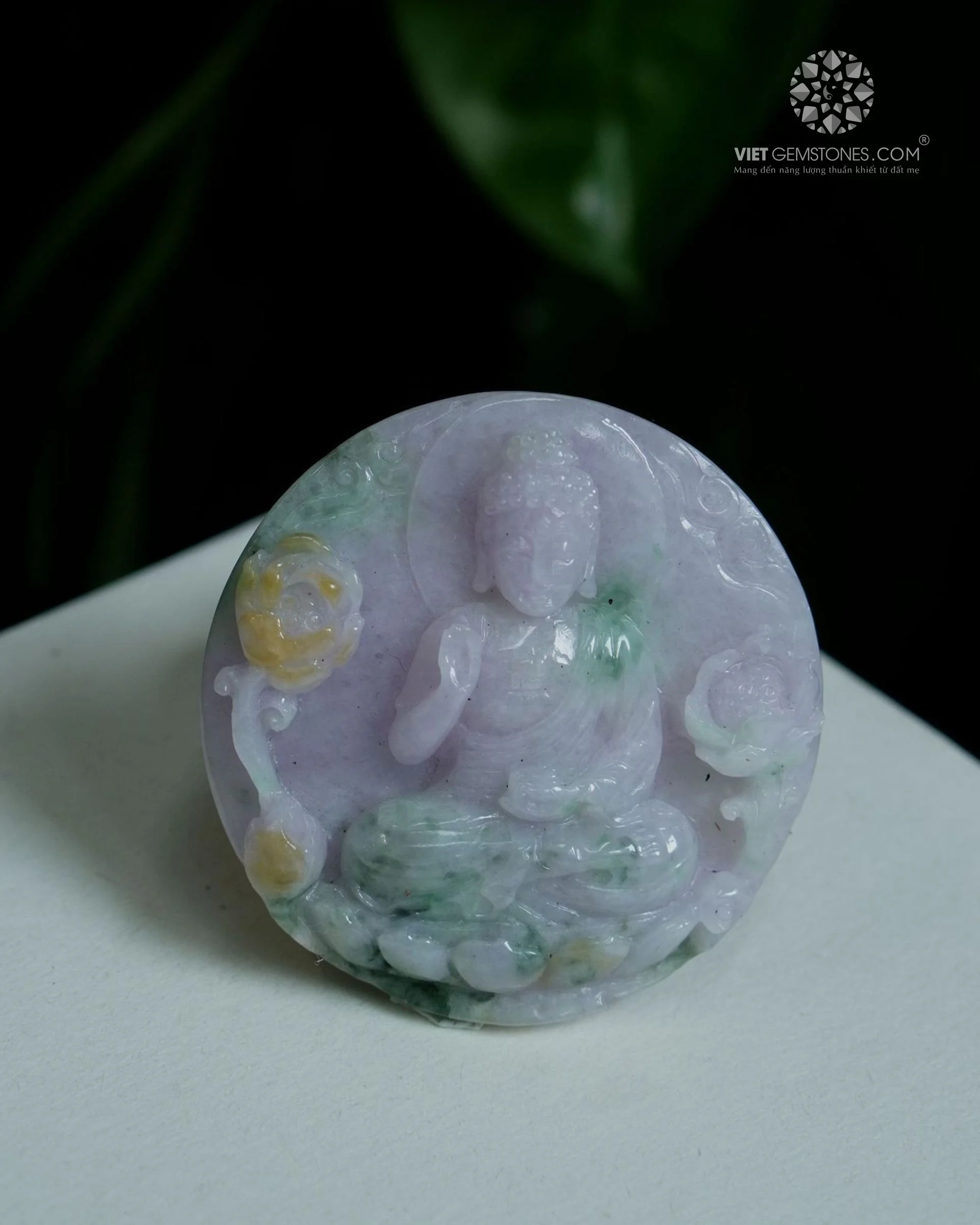

In Vietnam, she is known as Quan Âm Bồ Tát or Quán Thế Âm Bồ Tát. Her name, 觀世音, is commonly understood as the Bodhisattva who listens to the sounds of the world — hearing the cries, suffering, and prayers of sentient beings.
But beyond Buddhist teachings, Guanyin also exists in a much more everyday way.
People keep images of Guanyin in their homes.
They place statues of Guanyin in places of reverence.
They give Guanyin pendants as gifts.
They wear a small image close to the body as a quiet reminder to remain calm, compassionate, and gentle in the way they move through life.
Perhaps this is why the culture surrounding Guanyin has grown beyond the boundaries of a single religion to become a familiar part of the spiritual and cultural landscape of many Asian communities.
Who Is Guanyin?
In Mahayana Buddhism, Guanyin Bodhisattva is an embodiment of compassion.
The name Guanshiyin is commonly interpreted as “the one who observes the sounds of the world” — listening to the cries of sentient beings and responding to their suffering.
The figure of Guanyin appears throughout Mahayana Buddhist scriptures and is particularly associated with the Lotus Sutra and its Universal Gate Chapter.
For anyone exploring the meaning of Guanyin, compassion and attentive listening are among the central ideas associated with this figure.
What makes Guanyin especially fascinating is that she does not appear in only one form.

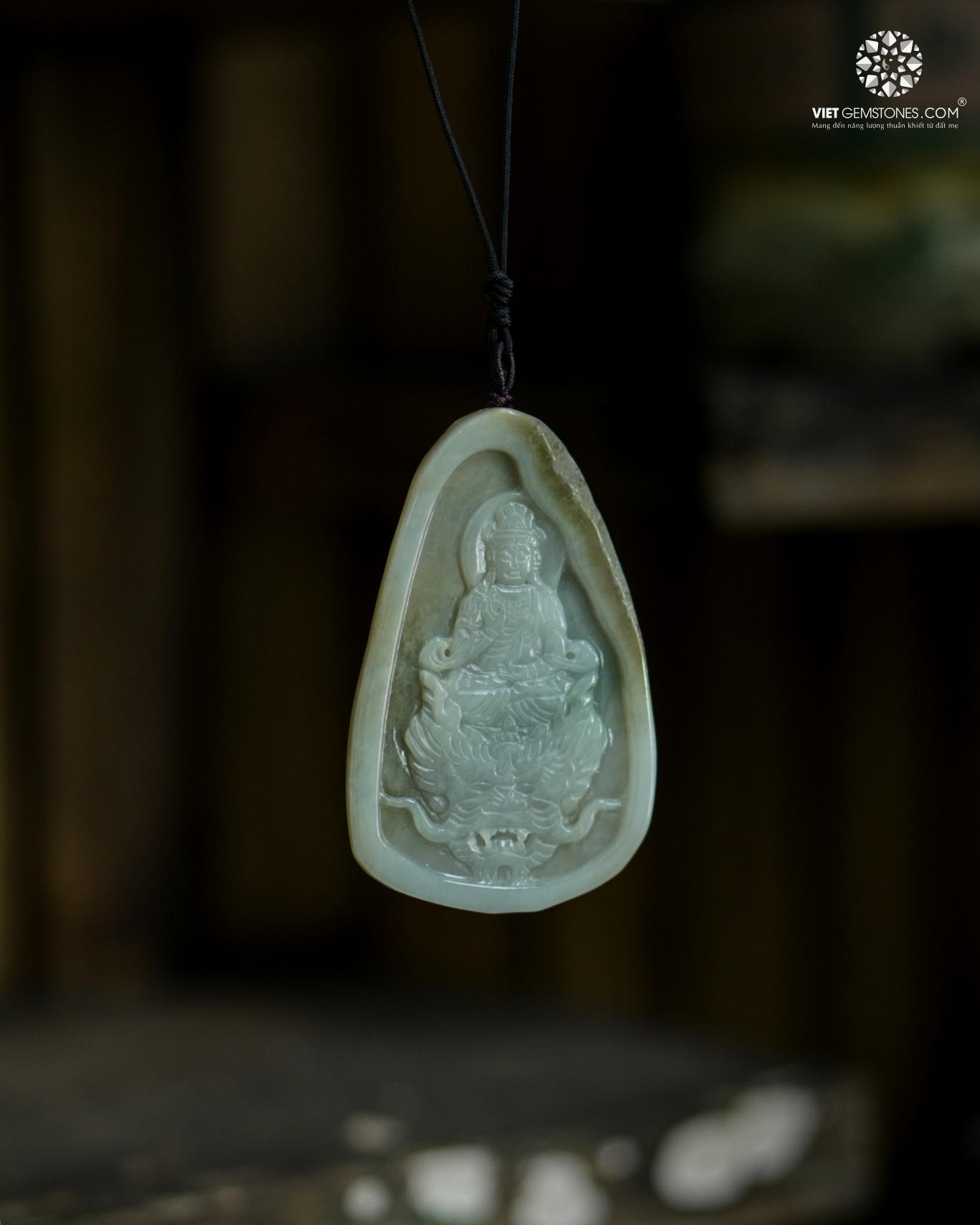
In Buddhist art and culture, Guanyin can be portrayed in different poses, with different attributes and appearances. Sometimes she stands upon a lotus holding a pure-water vase and willow branch. At other times, she appears as the Thousand-Armed and Thousand-Eyed Guanyin — a powerful symbol of seeing suffering and extending help in countless directions.
As the image of Guanyin traveled across East Asia, it also gradually took on the distinct characteristics of each local culture.
This is part of what makes the figure so remarkable: while rooted in a shared Buddhist tradition, Guanyin has been understood and portrayed in different ways as she entered different cultures.
From India to East Asia: The History of Guanyin
The figure of Guanyin originates from Avalokiteśvara, the Bodhisattva of compassion in Mahayana Buddhism.
As Buddhism spread, the figure traveled into China and later influenced Buddhist cultures in Korea, Japan, Vietnam, and other parts of East Asia.
Along the way, Guanyin was not simply preserved as a figure from scripture.
She gradually became woven into art, literature, architecture, folk beliefs, and family life.
In China, Guanyin is commonly known as Guanyin (觀音). The gentle, compassionate, and increasingly feminine portrayal of Guanyin became particularly widespread from around the Song dynasty onward.
In Japan, Guanyin is known as Kannon, appearing in many different forms of Buddhist art and religious traditions.
In Korea, the figure of Gwan-eum likewise holds an important place in Buddhist art and spiritual life.
And in Vietnam, Guanyin ,known as Quan Âm, feels especially close to everyday life — from village temples and statues in temple courtyards to household images and small pieces of jewelry worn close to the body.
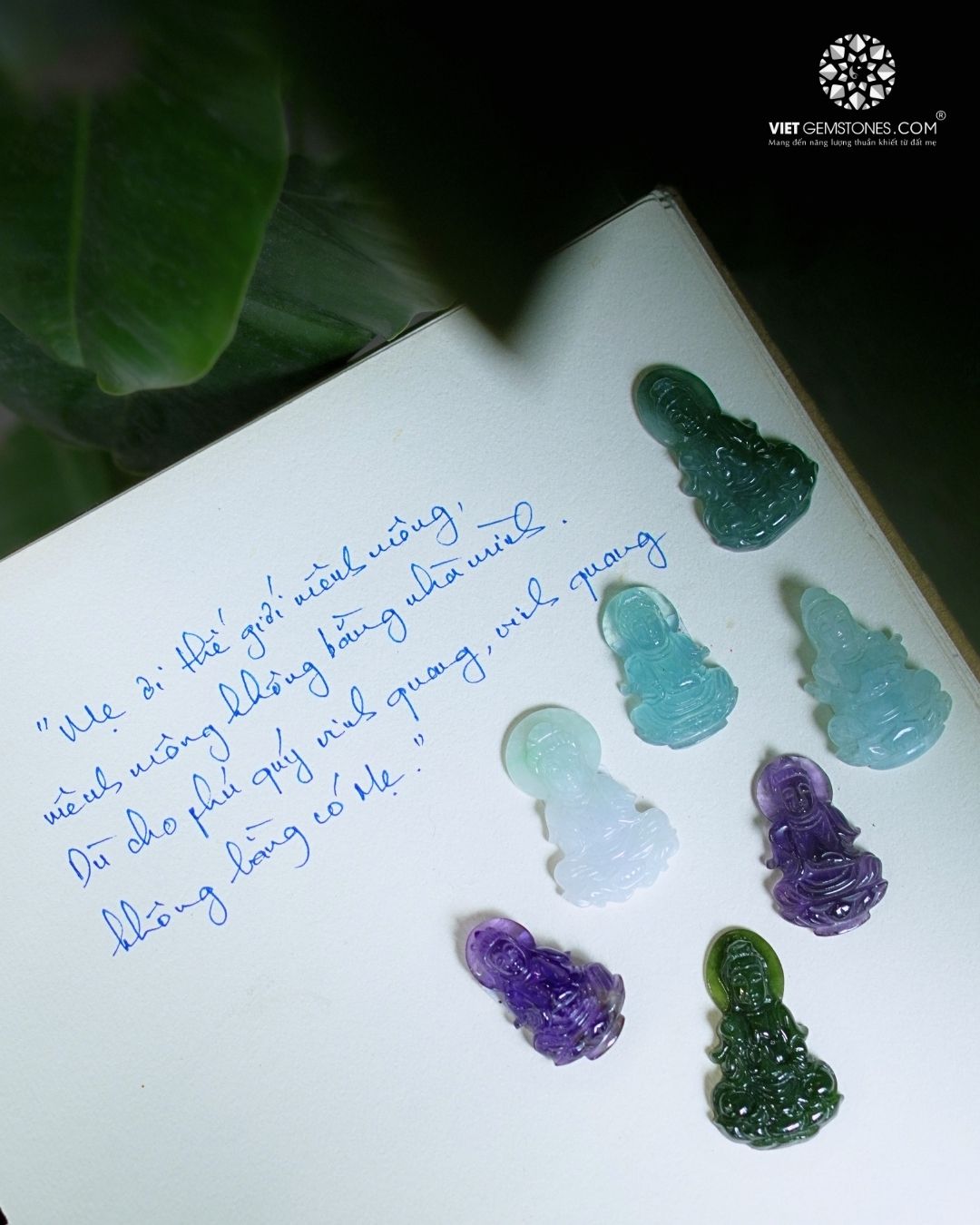
Each place has its own name, its own artistic traditions, and its own stories. Yet at the heart of them remains something familiar: compassion and the act of listening.

Guanyin in Vietnamese Culture
In Vietnam, the image of Guanyin has been part of cultural life for centuries.
She can be found in ancient temples, household altars, folk paintings, and countless works of Buddhist sculpture.
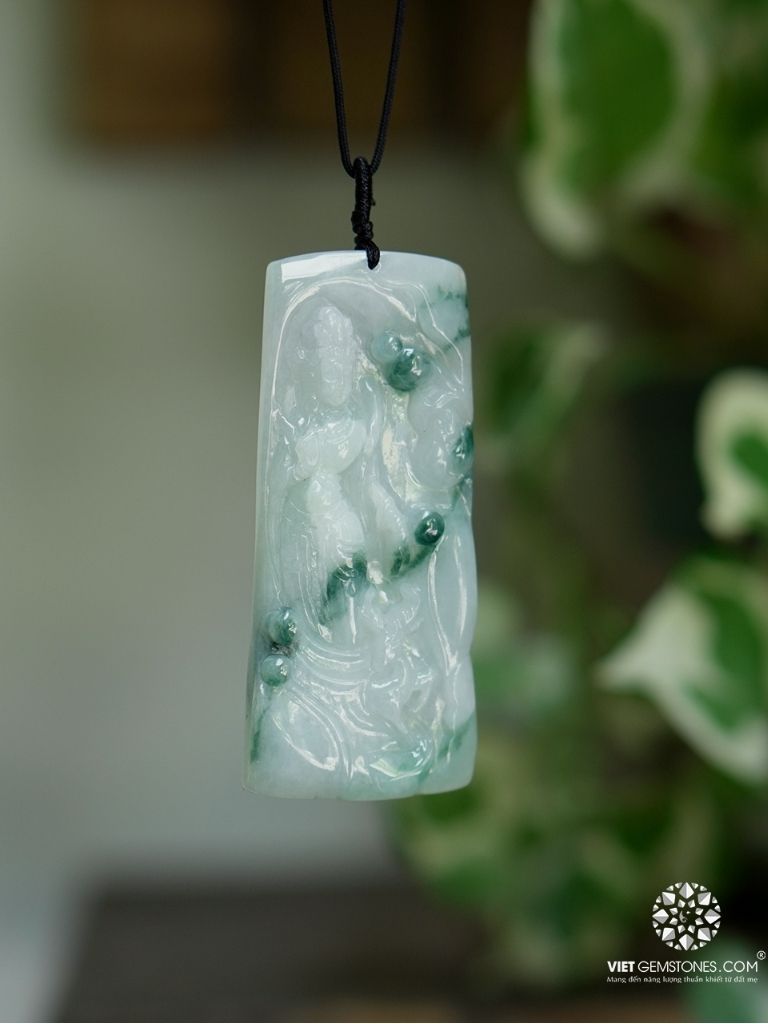
One of the most familiar depictions is Guanyin standing or seated upon a lotus, holding a pure-water vase and a willow branch.
The vase is often associated with amrita, or the nectar of compassion — a symbol of purity and the soothing of suffering. The willow branch, meanwhile, evokes flexibility, gentleness, and resilience.
But perhaps what feels most familiar to Vietnamese people is not necessarily the symbolism itself.

It is the way people speak about Guanyin.
She is often associated with gentleness, compassion, listening, and protection.
In families with Buddhist traditions, a statue of Guanyin may be placed in a respectful and meaningful position within the home.
Some visit temples to pay their respects to Guanyin on special occasions.
Some wear a small Guanyin pendant as jewelry.
And there are also those who do not actively practice Buddhism, yet still feel a sense of closeness to the figure.
Because sometimes, a symbol does not need to be understood through every layer of its religious meaning to hold a meaningful place in everyday life.
“Men Wear Guanyin, Women Wear Maitreya” – A Familiar Folk Saying
When exploring the Vietnamese tradition of wearing Buddhist images, many people may have heard the saying:
“Men wear Guanyin, women wear Maitreya.”
This is a relatively familiar folk belief, particularly within the broader culture of Asian jewelry and spiritual traditions.
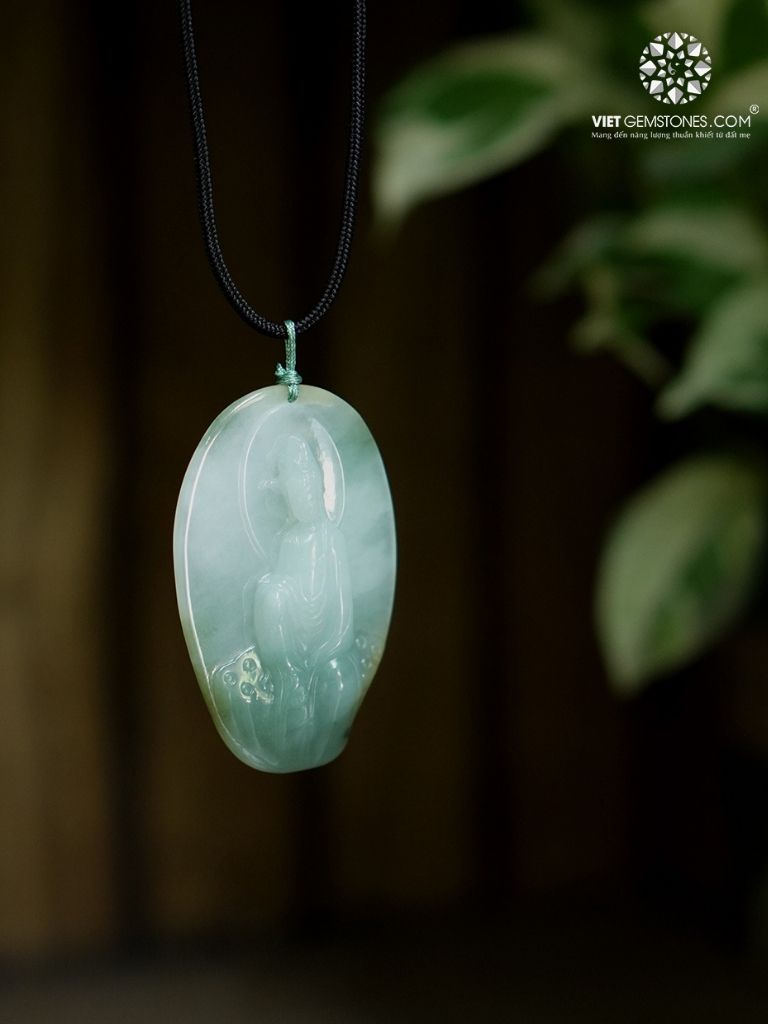

However, this saying is not a teaching or requirement of Buddhist doctrine.
Rather, it belongs to the realm of folk interpretations of Buddhist figures, passed down through cultural life over generations.
Traditionally, Guanyin has often been associated with gentleness, compassion, and kindness, while Maitreya is commonly associated with laughter, generosity, and joy.
From a contemporary perspective, however, neither figure needs to be limited by gender.
A man can wear Guanyin. A woman can wear Guanyin too.
Because what draws someone to Guanyin may simply be a personal connection with the values the figure represents.
Not because they are “male” or “female.”
But because everyone has moments when they need a reminder to slow down, listen, and treat others with greater kindness.
Why Do People Wear Guanyin Close to Their Heart?
Perhaps this is one of the most interesting parts of the tradition of wearing Buddhist images.
A Guanyin pendant can hold very different meanings for different people.
For a Buddhist, it may serve as a reminder of compassion and the path of spiritual practice.
For an older person, it may be a gift passed down to a child or grandchild, carrying a heartfelt wish for peace and well-being.
For a younger person, it may simply be a piece of jewelry with personal meaning — something small to remind them to remain calm through uncertain or changing days.
And for someone who does not follow any religion, Guanyin can still be appreciated as a cultural symbol of compassion, listening, and human kindness.
This is also why Guanyin has found such a natural place within Asian jewelry culture.
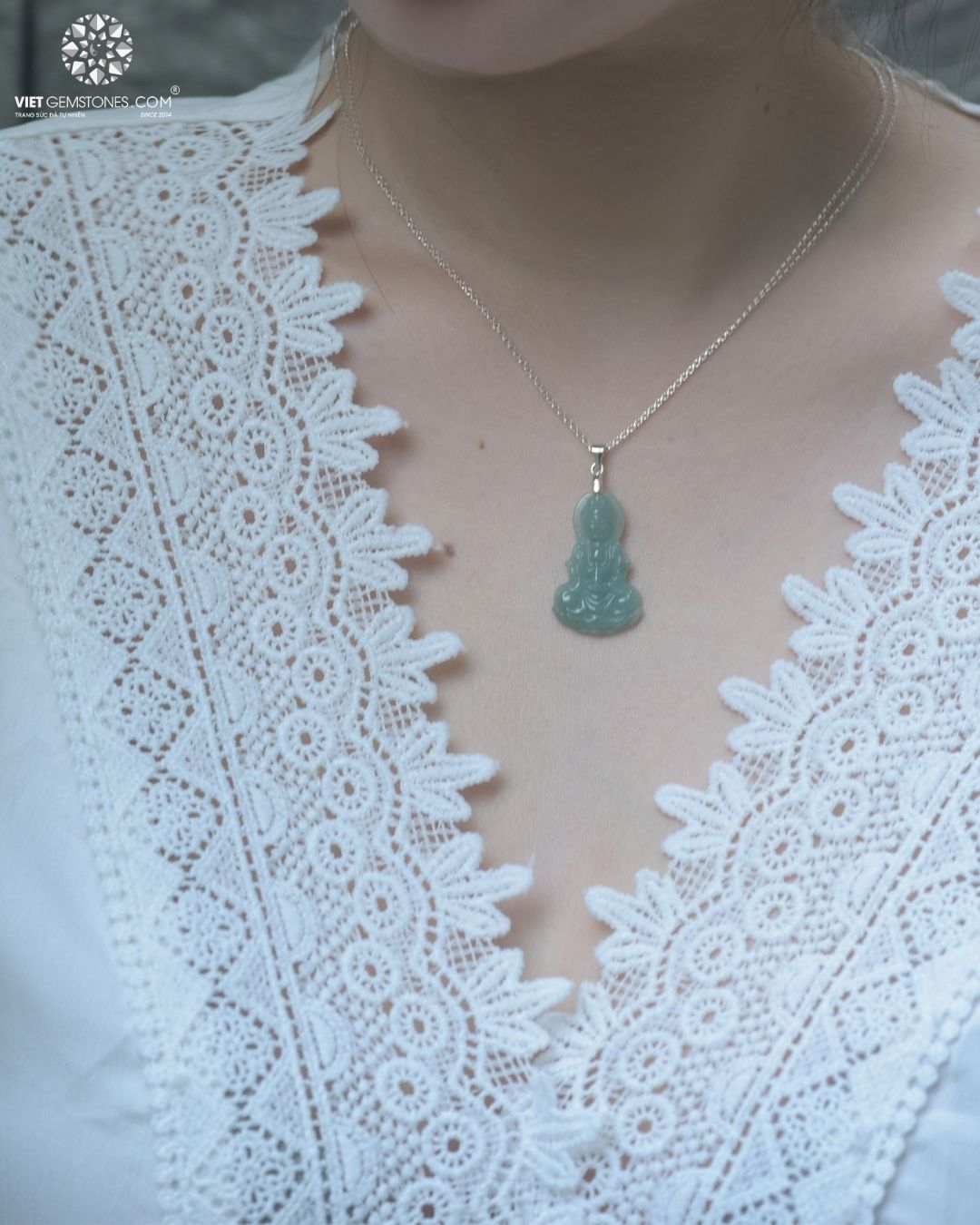
A small Guanyin pendant rests close to the heart.
Not necessarily to ask for something.
But sometimes simply to remember something.
To remember to speak a little more gently.
To be more patient with the people around us.
To listen before judging.
To leave a little room for stillness on days filled with too much noise.
Guanyin Is Not Only a Figure to Pray To
In everyday spiritual life, religious figures are sometimes associated with very specific hopes: peace, health, family, work, or other wishes for a better life.
These hopes are part of how faith and folk spirituality are lived.
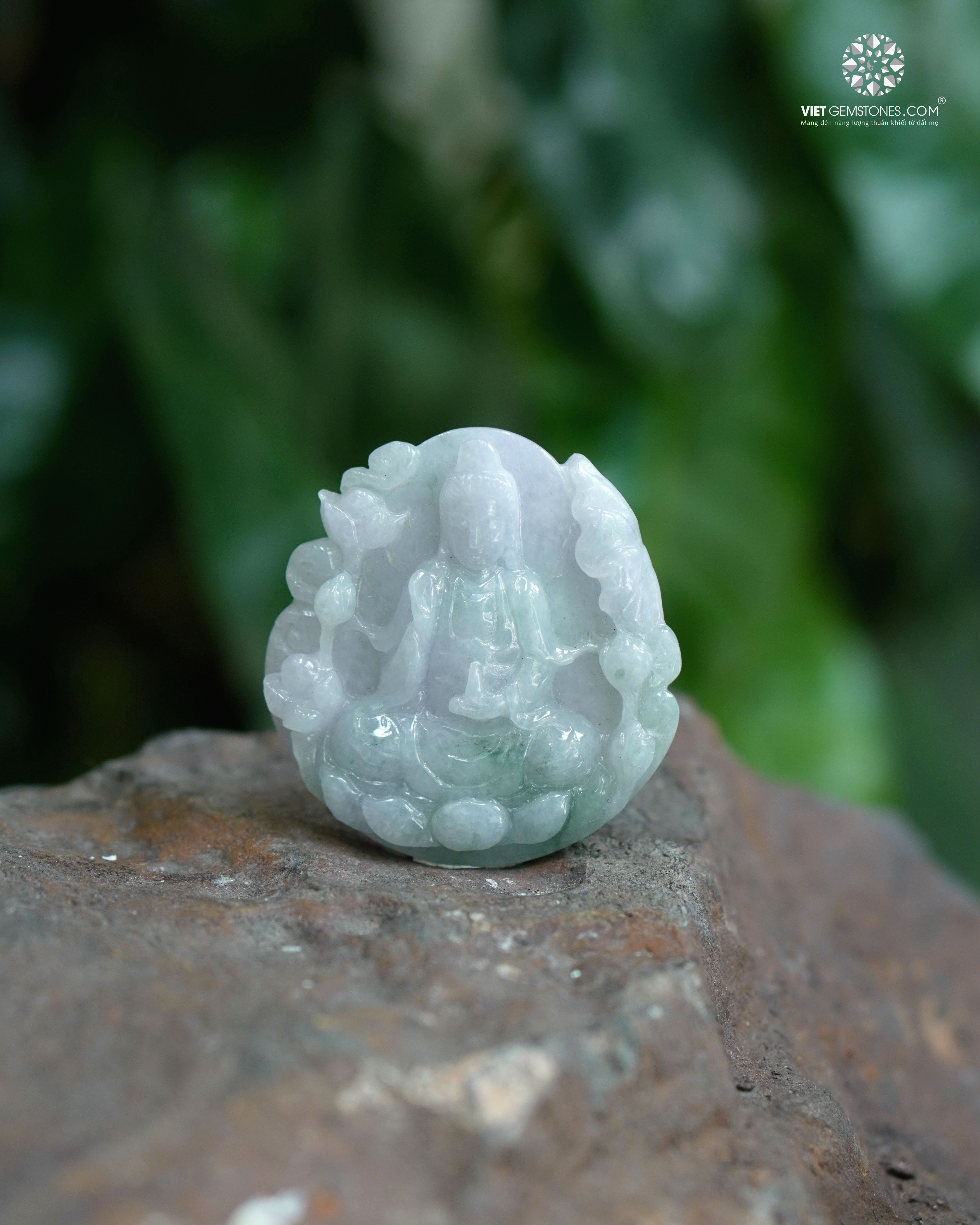
But there is another, quieter way to look at Guanyin.
Guanyin is not only someone to pray to. She is also someone to remember.
To remember compassion.
To remember the importance of listening.
To remember that everyone carries feelings and struggles that others may never see.
And to remember that gentleness is not weakness.
Perhaps this is one reason Guanyin has remained such a lasting presence throughout Asian culture.
Not because people always need an answer to every problem.
But because people sometimes need a symbol to return to when life becomes too loud.
A Figure That Can Belong to Many People
One of the beautiful things about Asian culture is that the boundary between religion and culture is not always completely separate.
Someone may be born into a Buddhist family.
Someone else may be Catholic.
Another person may not follow any religion at all.
Yet all three may still see in Guanyin a beautiful image of compassion and humanity.
This does not mean that Guanyin's religious significance is replaced by a merely “decorative” meaning.

Rather, it shows how a cultural symbol can be understood on many different levels.
For practicing Buddhists, Guanyin carries meaning within Buddhist teachings and spiritual practice.
For those who approach her from a cultural perspective, Guanyin is an artistic and spiritual figure that has been woven into Asian life for centuries.
For someone who wears Guanyin jewelry, she may simply be a gift, a keepsake, or a deeply personal reminder.
There is no need for everyone to understand the figure in exactly the same way.
One Guanyin Pendant, One Personal Story
Some jewelry is chosen for its color.
Some pieces are chosen for their design.
But a Guanyin pendant is often chosen because there is a story behind it.
Someone buys one for their mother.
Someone gives one to their grandmother.
Someone carries one with them after going through a difficult chapter in life.
Someone simply sees the serene face of Guanyin and feels a sense of peace.
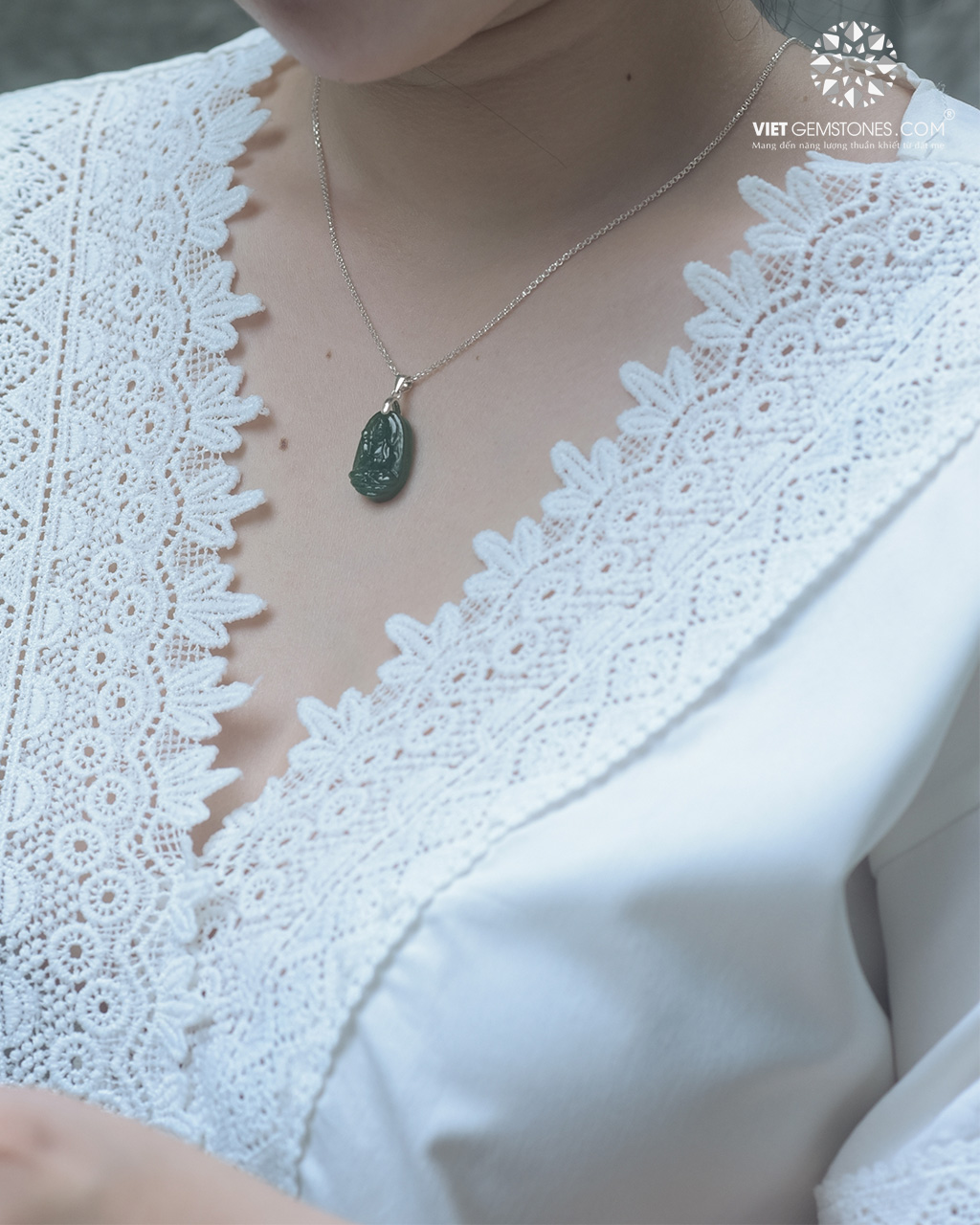

And there are those who choose a Guanyin jade pendant because they are drawn to the beauty of the stone — and only later begin to discover more about the figure they have chosen to carry with them.
Perhaps this is also one of the most natural ways culture is passed down.
Not through long lessons.
But through something given from one person to another.
A mother giving one to her daughter.
A husband choosing one for his wife.
A child looking for a Guanyin pendant for their mother.
A friend leaving for a distant place, carrying a small gift from home.
One figure, many stories.
From an Asian Cultural Symbol to a Meaningful Piece of Jewelry
Today, Guanyin is not found only in temples and sacred spaces.
She appears in paintings, sculptures, traditional crafts, and jewelry.
Among them, Guanyin jade pendants carry a beauty of their own.
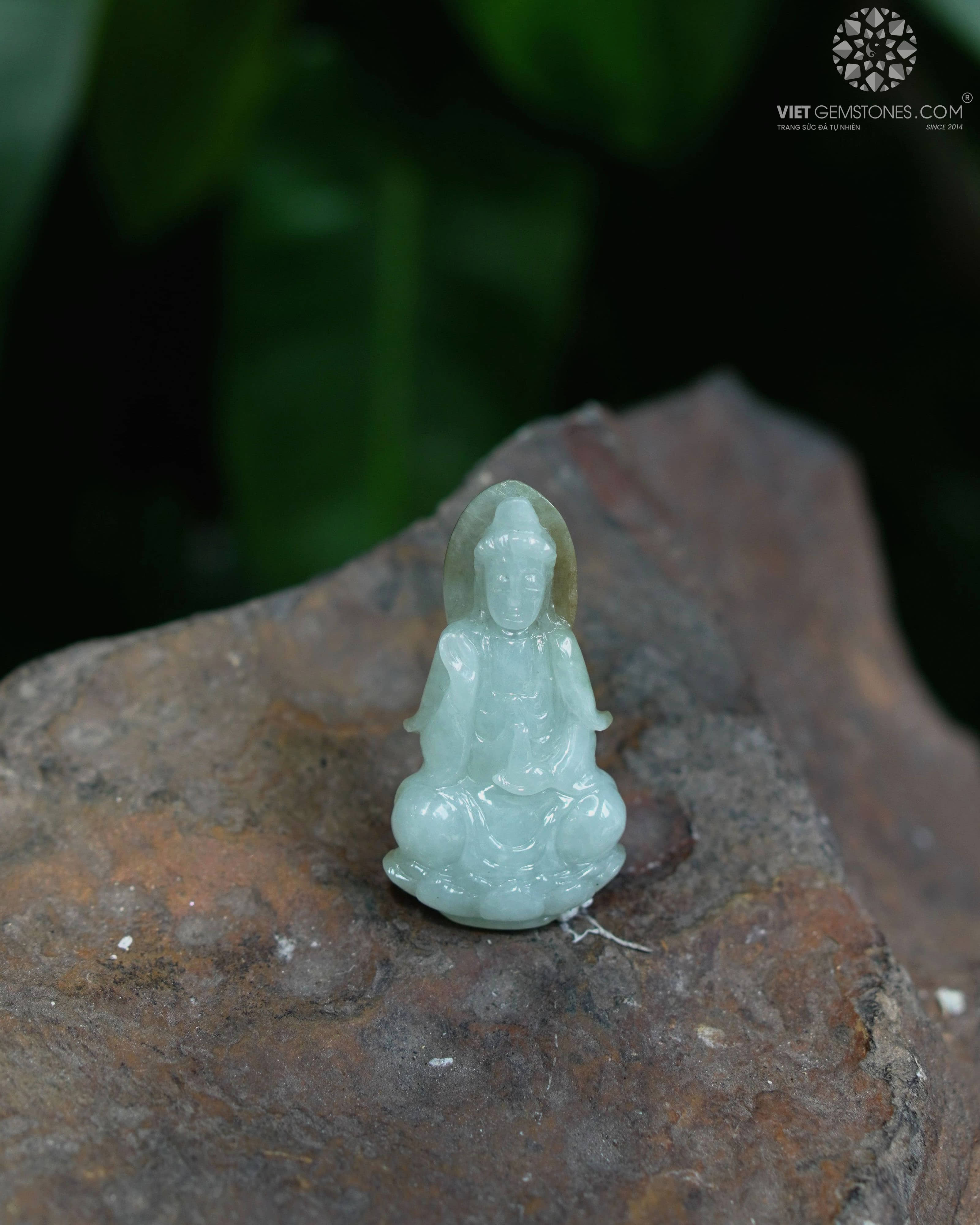

Jade has been closely connected with Asian culture for centuries. When carved into the form of Guanyin, the natural beauty of the material meets the meaning of the figure in a small object that can be carried through everyday life.
A jade pendant does not need to be large.
It does not need an abundance of detail.
It only needs graceful lines, a serene expression, and a beautiful piece of jade.
So that when it rests against the chest, Guanyin can retain the quietness that has always been part of her image.
And the person wearing her may find something of themselves in that stillness.
Wearing Guanyin Close to You – Sometimes, It Is Simply a Reminder
In the Asian tradition of wearing Buddhist images, perhaps the most meaningful part is not what a piece of jewelry is believed to bring.
It is the meaning the wearer chooses to place in it.
A Guanyin pendant cannot make us kinder.
It cannot make our choices for us.
And it cannot replace the effort each person must make in their own life.
But a symbol can remind us of the person we want to become.
In this sense, wearing Guanyin becomes something deeply personal: carrying a reminder of compassion, calmness, and the ability to listen.
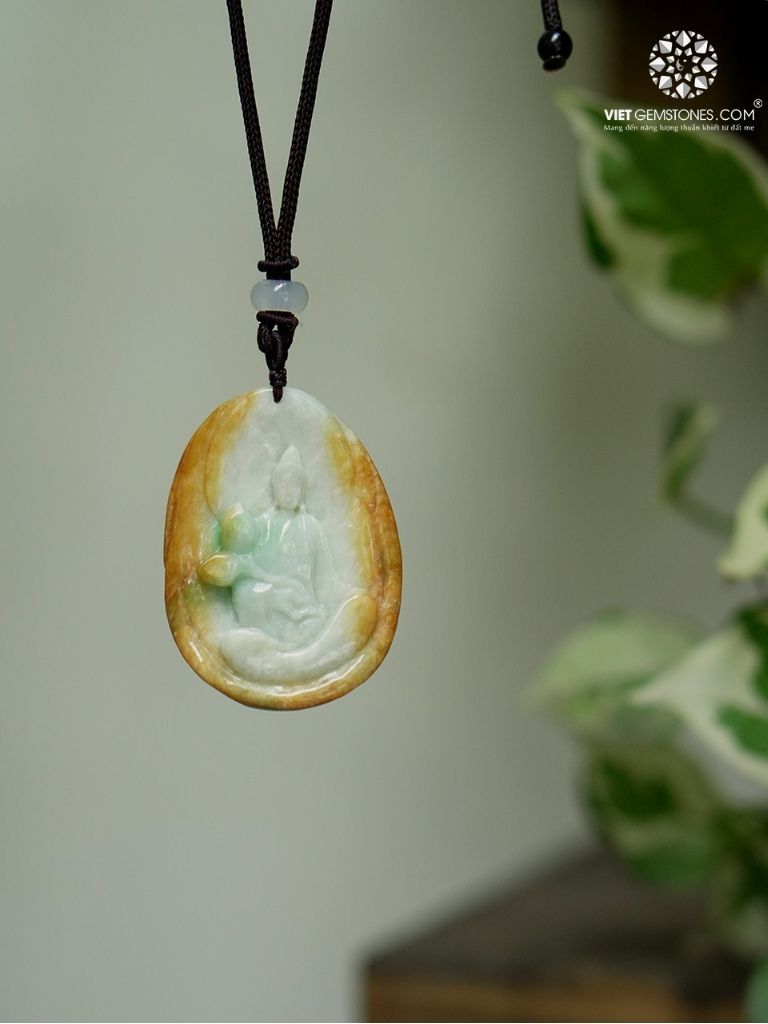

Perhaps this is why a figure that emerged from the long history of Buddhism continues to find a place in modern life.
Quietly.
Without the need to be noticed. Simply resting close to the wearer, becoming a small part of their own story. And perhaps, that is also the beauty of culture.
A symbol can travel across hundreds, even thousands, of years, through different lands and generations — while still allowing each person to discover a meaning of their own.
Guanyin at VietGemstones
At VietGemstones, Guanyin is approached through both the cultural meaning of the figure and the natural beauty of jade.
Each jade pendant is individually carved from a material with its own color, translucency, and natural structure. As a result, no two pieces are ever exactly alike.
Some people choose a Guanyin pendant for themselves. Some look for one as a gift for their mother, grandmother, or someone they love.
Whatever the reason, a piece of Guanyin jewelry can begin with something very simple: choosing a figure you want to carry with you.
Because in the end, jade is something we wear. The meaning it carries, however, lives within the person who wears it.
Bạn có thể quan tâm

Peridot: The Green Gemstone with a History Written in Stars
Among the world’s gemstones, Peridot has a distinctive kind of beauty. Its green is not the deep, mysterious green of Emerald, nor the cool, tranquil green of Jade. Peridot carries a warmer light—often described as olive, lime, or golden green—like sunlight passing through young leaves. But what makes Peridot truly fascinating is not only its color. For thousands of years, this gemstone has been surrounded by stories of hidden treasure, ancient civilizations, protection from darkness, and even celestial origins. Some of these stories are myths. Others are rooted in surprisingly fascinating facts. Here are a few things about Peridot that you may not have known. Peridot May Be One of the Few Gemstones Born Deep Inside the Earth Unlike many gemstones that form in the...
Chủ Nhật, 02/08/2026

THẾ GIỚI TÍ HON TRONG LÒNG VIÊN THẠCH ANH
Những “vị khách không mời” kể chuyện hàng triệu năm địa chất Nếu có một loại đá mà hầu như bất kỳ ai từng bước vào một tiệm trang sức đá tự nhiên cũng ít nhất một lần cầm trên tay, thì rất có thể đó là thạch anh. Một chiếc vòng thạch anh tóc, một mặt dây thạch anh khói, một chuỗi hạt thạch anh hồng, hay đơn giản chỉ là một tinh thể thạch anh trong suốt đặt trên bàn làm việc. Thạch anh quen thuộc đến mức đôi khi chúng ta quên mất rằng, bên trong những viên đá tưởng như trong veo và tĩnh lặng ấy, có thể đang tồn tại cả một thế giới rất nhỏ. Một thế giới...
Thứ Ba, 08/09/2026

Vòng cẩm thạch nguyên khối: chọn thế nào cho đúng và cách nhận biết thật - giả
“Vòng này có thật không shop?”, “Con xem giúp cô vòng của cô thật hay giả?” “Vòng này lúc trước mình mua giá như vậy là cao hay thấp?” là những câu hỏi tụi mình thường được nhận khi tư vấn.Câu hỏi thì ngắn, nhưng câu trả lời lại chưa bao giờ ngắn được. Bởi vì trong thế giới cẩm thạch, hai chữ "ngọc thật" gói gọn ít nhất ba tầng nghĩa: Thật về chất liệu: Chuẩn ngọc tự nhiên, không phải thủy tinh hay nhựa giả đá. Thật về xử lý: Chưa qua tẩy rửa axit hay bơm keo hóa chất. Thật về giá trị: Chất lượng ngọc thực sự tương xứng với số tiền bạn đã bỏ ra. Ba tầng nghĩa ấy...
Thứ Bảy, 05/09/2026

Cẩm Thạch, Phỉ Thúy, Ngọc Bích: Ba Cái Tên, Hai Viên Đá Và Một Sự Nhầm Lẫn Kéo Dài
Có một câu hỏi tưởng như rất đơn giản khi bắt đầu tìm hiểu về ngọc: Rốt cuộc “ngọc” là gì? Ở Việt Nam, ba cái tên cẩm thạch, phỉ thúy và ngọc bích thường được nhắc đến cùng nhau. Có khi chúng được dùng như những cách gọi khác nhau của cùng một loại đá. Nhưng thực tế không hẳn như vậy. Đằng sau ba cái tên ấy là hai loại khoáng vật khác nhau — có cấu trúc, tính chất, nguồn gốc địa chất và lịch sử văn hóa khác nhau. Và có lẽ chính sự lẫn lộn này khiến câu chuyện về ngọc trở nên thú vị hơn rất nhiều. Bắt đầu từ một chú chim Trong ba cái tên trên, phỉ thúy...
Thứ Ba, 01/09/2026

THÁNG 5 – THÁNG CỦA EMERALD
Từ cao nguyên Ethiopia đến “vành đai xanh” Zambia: Hành trình của viên ngọc lục bảo Tháng 5 luôn được xem là tháng của Emerald – ngọc lục bảo, loại đá quý mang sắc xanh của sự sống, của mùa xuân và của tái sinh. Nhưng phía sau màu xanh mê hoặc ấy không chỉ là vẻ đẹp. Đó còn là câu chuyện của địa chất, của những vùng đất khắc nghiệt, của lịch sử khai khoáng và cả những bí mật nằm sâu bên trong từng bao thể nhỏ bé. Cao nguyên Ethiopia Nếu bạn đang sở hữu một viên Emerald xanh mướt đến từ Ethiopia hay Zambia, rất có thể viên đá ấy đã trải qua một hành trình dài hơn...
Thứ Năm, 14/05/2026

Nhận biết các đặc điểm tự nhiên của ngọc Jadeite - Vân, sớ, bông, rạn, rễ màu
Các bài viết liên quan: Tiêu chí đánh giá phẩm chất và phân cấp ngọc Phỉ Thúy Đôi nét về Phỉ thúy và những hiểu lầm về ngọc Phỉ Thúy thường gặp Nhận biết các màu sắc của phỉ thuý (Jadeite) Là ngọc hay đá – Góc nhìn của người làm nghề đá tự nhiên Lợi ích khi đeo vòng ngọc Jade - hành trình của người và ngọc Nếu đặt một viên phỉ thuý bên cạnh thủy tinh hay kim loại, sự khác biệt lớn nhất không nằm ở màu sắc hay độ bóng, mà nằm ở bản chất cấu trúc. Jadeite không phải là một khối đồng nhất, mà là một hệ thống đa tinh thể cực kỳ phức tạp, được tạo thành từ...
Thứ Bảy, 04/04/2026